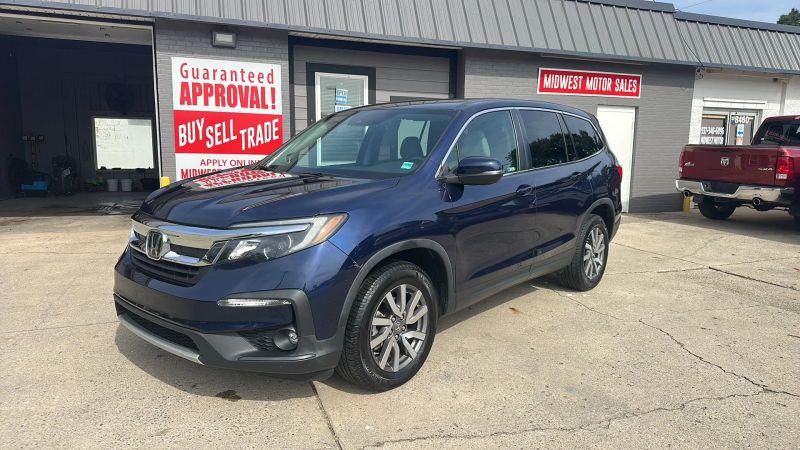
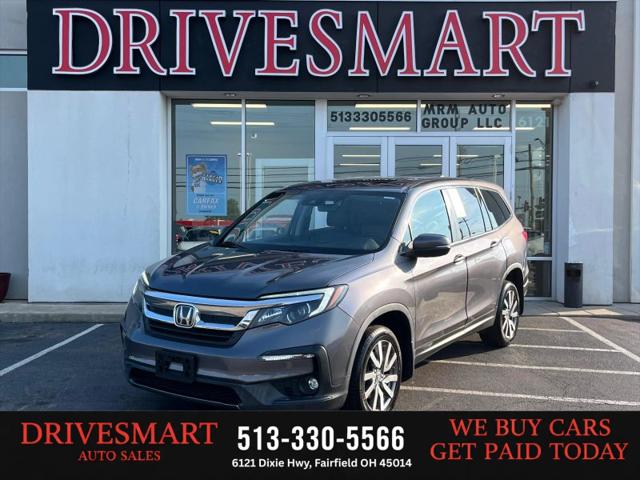
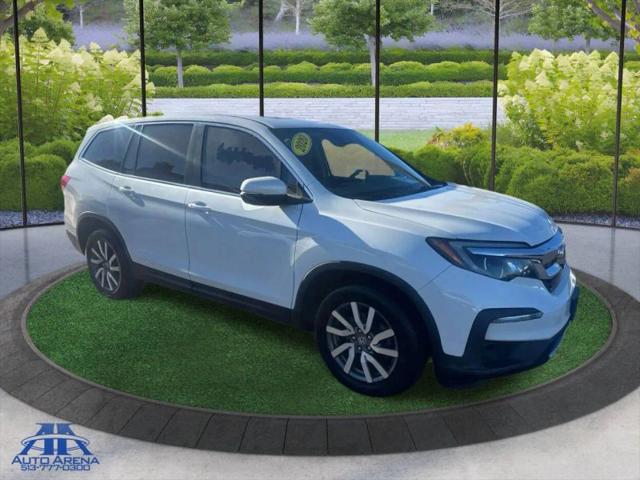
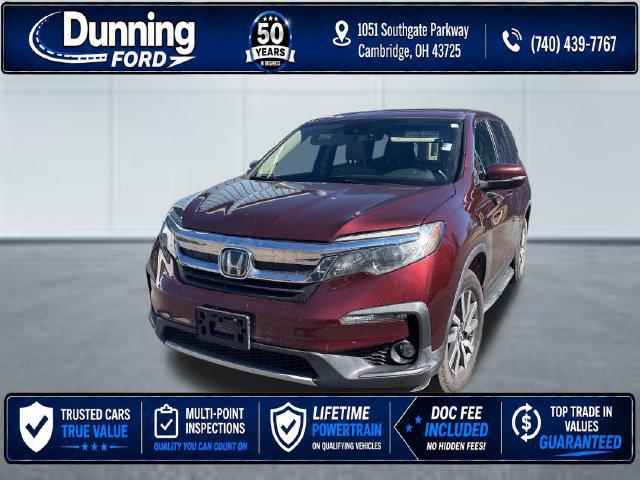
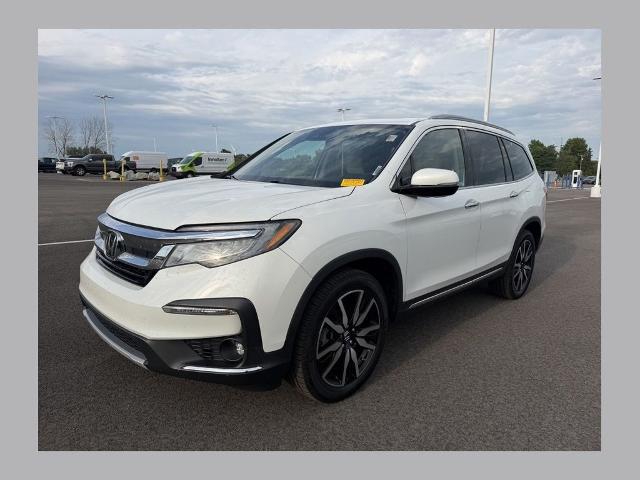
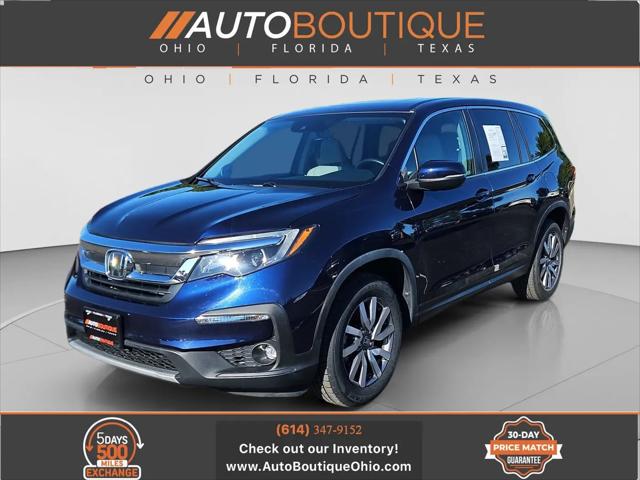
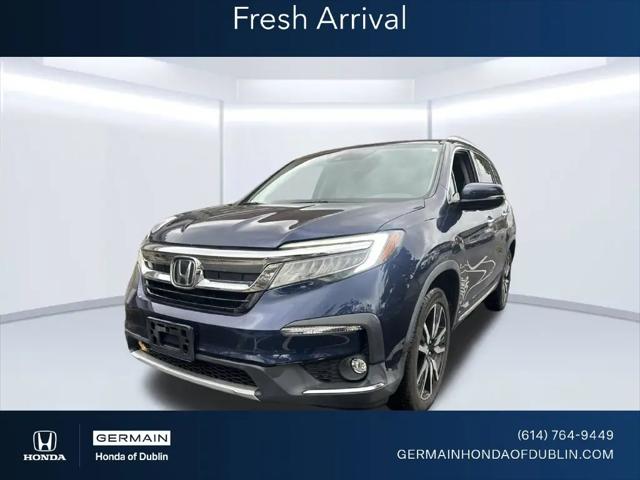
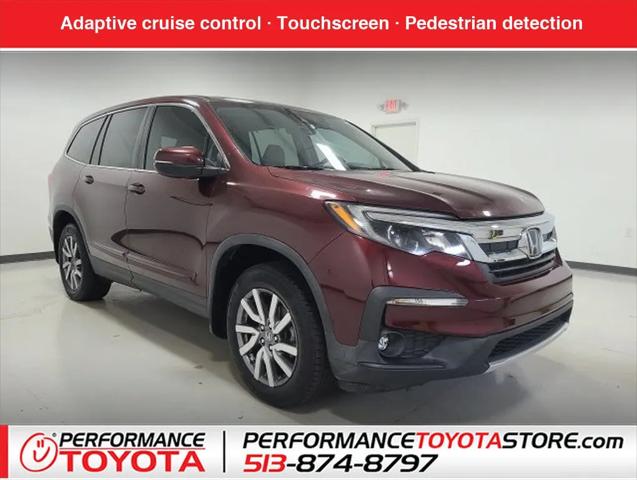
In the sections that follow, our expert provides his own perceptions about how the Honda Pilot measures up in each of the 10 categories that comprise the 2019 APEAL Study.
Exterior
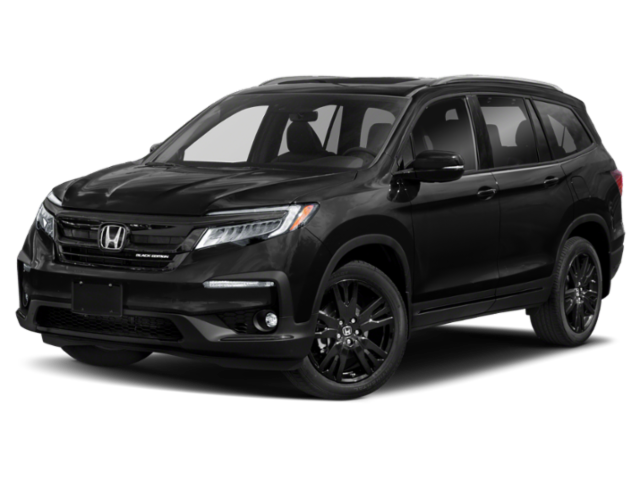
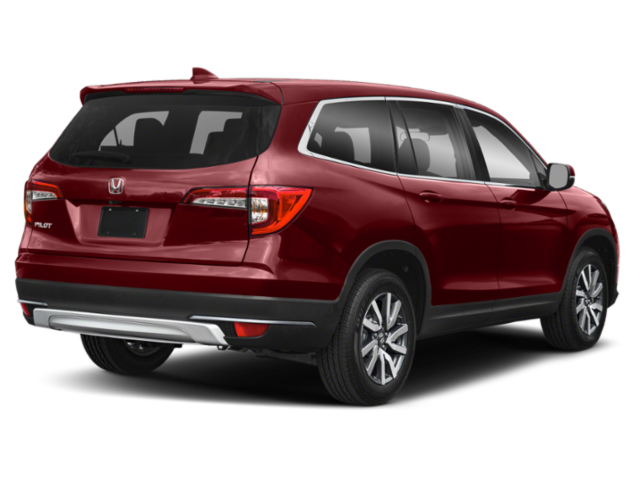
Pilot owners cite styling as their third favorite thing about this SUV. I’m not sure what to make of that, because gray body cladding notwithstanding, the Honda Pilot is a minivan for people who don’t want a minivan. Sand the nose down a few inches, and what you’ve got is a Honda Odyssey without the handy sliding side doors.
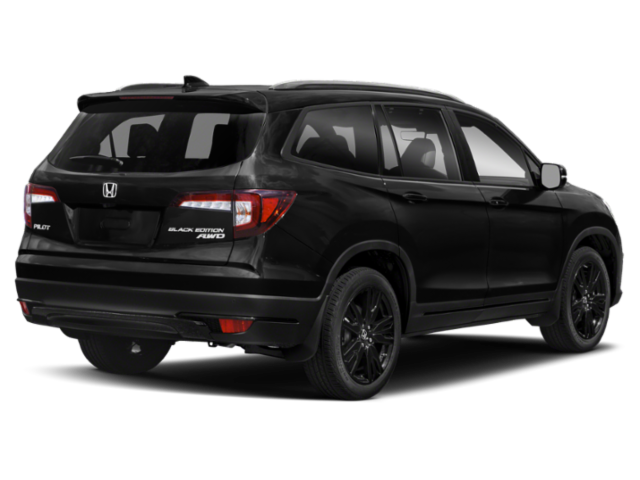
Painted black with black wheels, and equipped with a black interior that has piano black trim panels, the Pilot Black Edition test vehicle stayed clean for about five minutes. Dust, fingerprints, sand from my third-grader’s playground, white hair from our cat and dog, splashes from water on the road – within 24 hours this SUV was a mess. Neat freaks need not apply.
Interior
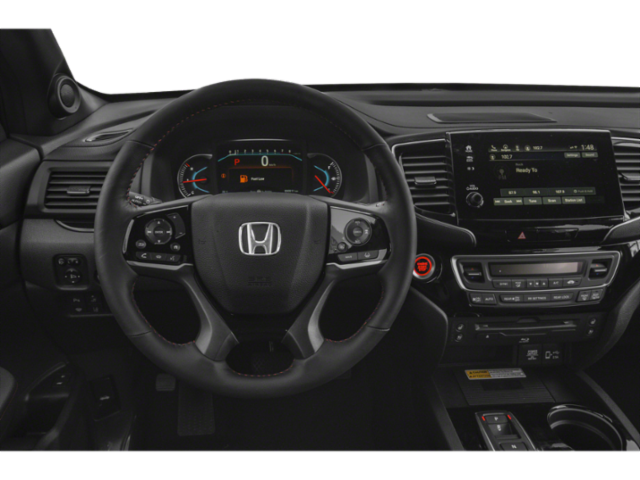
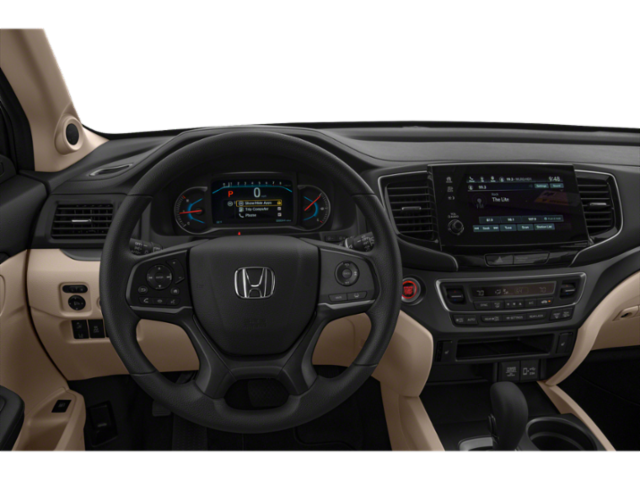
Get into the Pilot’s driver’s seat, and it even feels like a minivan. You can’t see the hood. The outward view is expansive. The front seats are captain’s chairs separated by a low but exceptionally practical center console. Aside from the fact that you can’t easily step between the front seats to access the second-row, it looks and feels just like one of those dreaded van-shaped blobs.
But, this is actually a good thing. Minivans are exceptionally practical, making daily life easy. Being able to see out, having places to stash stuff (like in the Pilot’s brilliant shelf storage in each door panel), and having easier access to the second-row seats are all positive qualities.
Honda also imbues the Pilot with high quality materials, all the dust- and fingerprint-gathering notwithstanding. Everything looks and feels like it will last a long time. Limited exterior paint and interior color combinations are disappointing, however.
Seats
When it comes to driver’s seat comfort, the Pilot shines. Starting with EX trim, the 10-way power adjustable seat makes it easy to find a proper driving position that supplies exceptional thigh support.
The front passenger is not as lucky. While the seat sits high enough off of the floor to be comfortable, it lacks height and cushion angle adjustment.
Both front seats have adjustable inboard armrests. Unfortunately, they get in the way every time you buckle the seat belt, so a part of every trip in the Pilot includes pushing the armrest up, snapping the buckle into place, and then lowering and adjusting the armrest again. I simply stopped using it.
Second-row seating is comfortable. The test vehicle had captain’s chairs that slid forward and back, separated by a low center console. Equipped with manual side window shades, a Blu-ray-based rear entertainment system, wireless headphones, and a remote, it kept the kids occupied during slogs into the city.
Third-row comfort is adequate, and nothing more. The bottom cushion and backrest are as flat as central Nebraska, making this location acceptable to adults only for shorter trips. Knee room is decent, especially if the people in the second-row seats are willing to slide forward a bit.
Climate Control System
Tested in Southern California during mild fall weather, the Pilot’s triple-zone climate control system went unchallenged. The only negative comment uttered by any passengers pertained to how the side-window glass didn’t repel enough solar heating from the low sun.
Climate controls are easy to use, and my kids liked that they had their own set of them in the back. Heating and ventilation buttons are not located with the rest of the controls, but this is not a problem.
Infotainment System
Honda has taken some knocks for its infotainment system user experience, but the company periodically takes action to address complaints. For example, the 2020 Pilot has a volume knob that also serves to shut off the stereo. A simple thing, yes, but something Honda got away from for a little while.
The 8-inch display screen that’s included in EX trim and higher is flush-mounted for a clean appearance, and is neatly integrated between the air vents for a cohesive look. It needs to be larger, though. And it needs both a tuning knob and easier access to main menu shortcuts.
From a feature perspective, the Pilot’s 8-inch infotainment system shines. You get Apple CarPlay, Android Auto, text-messaging capability, satellite radio, HD Radio, and a quick-charge USB port. Cabin Control is also part of this system, allowing rear passengers to have smartphone-app remote control over various vehicle settings, which doesn’t sound like a good thing to me.
Touring, Elite, and Black Edition trim levels add navigation with traffic data, a 10-speaker premium sound system, Wi-Fi capability, high-end Honda Link subscription services, and Cabin Talk in-car PA system that allows the driver to communicate with rear-seat passengers through the stereo speakers or wireless headphones.
These versions of the SUV also include the rear-seat entertainment system with a 10.2-inch display, a 115-volt power outlet, and HDMI connections for gaming consoles.
Some of these features are also offered for the EX-L, and wireless smartphone charging is standard with Elite and Black Edition. You can get wireless charging on other trim levels as a dealer-installed upgrade.
Note that with Honda Link Remote subscription services (Touring and higher), you can take advantage of the Pilot’s Key by Amazon In-Car Delivery service. Basically, this allows an Amazon delivery driver to access your vehicle and leave your packages inside of it.
Storage and Space
If you (or Amazon) can’t find a place to put something inside of a 2020 Honda Pilot, you’re not trying hard enough. This SUV is a storage-solution champion, from its clever tiered shelves in the door panels to its huge center console bin and tray between the front seats. There’s even a covered bin under the cargo floor, perfect for hauling groceries in plastic sacks. That way, they won’t roll around or fall out when you open the liftgate.
Cargo space behind the third-row seat is never generous, but the Pilot can actually accommodate a couple of full-size suitcases standing upright in the 16.5 cu.-ft. area. Most people will fold the third-row seat down, though, creating a cavernous 46.8 cu.-ft. cargo hold. When you need maximum volume, fold the second-row seats down and you’ll have 83.9 cu.-ft.
Visibility and Safety
Pilot owners say that visibility and safety are their favorite things about this SUV, and there’s good reason for that. Expansive glass area, thin windshield pillars, huge side mirrors, and a multi-angle reversing camera all make it easy to see out of the Pilot.
Better yet, as of 2019, Honda ditched the old Lane Watch system for a proper blind spot monitoring system with rear cross-traffic alert, and includes it as standard equipment for EX trim and higher.
Honda Sensing is standard on all 2020 Pilots. It groups adaptive cruise control, forward collision warning, automatic emergency braking, lane departure warning, lane keeping assist, road departure mitigation, and automatic high-beam headlights together into a comprehensive suite of driving assistance and collision avoidance systems.
It’s great that these technologies are standard on every Pilot, but they don’t operate with the same level of accuracy and refinement as best-in-class systems such as Toyota Safety Sense 2.0. As a driver, you’re constantly aware of their operation, and it gets old, fast.
Honda restricts access to Honda Link Security, Remote, and Concierge services to Touring trim and higher. Security is free for the first 12 months, while Remote and Concierge offer 3-month trial periods. Security is the most important of the three, providing automatic collision notification, emergency calling, and quick access to roadside assistance. It should be available on other Pilots, especially the EX and EX-L.
If you have teenaged drivers in the house, you’ll want Honda Link Remote service. It includes programmable speed, curfew, and geographic boundary alerts, as well as a Find My Car locator service.
Safety is baked right into this SUV. The 2020 Pilot earns a Top Safety Pick rating from the Insurance Institute for Highway Safety for the 2019 calendar year. However, a less than perfect small overlap crash-test result for the front passenger could cause Honda to lose that rating in 2020.
Engine/Transmission
Apparently, Pilot owners aren’t all that crazy about the 3.5-liter V6 engine and automatic transmission that Honda uses to power this SUV – at least in comparison to other attributes. The V6 makes 282 horsepower and 262 lb.-ft. of torque, and a torque-vectoring all-wheel-drive system is optional. I think this V6 is a terrific engine, delivering robust acceleration in a refined manner.
I’ve never driven a Pilot with a 6-speed automatic (LX, EX, EX-L trim), so I cannot comment on its performance. As for the 9-speed automatic (Touring, Elite, Black Edition), in 2019 Honda recalibrated the transmission to solve for rough shifting, but the SUV still has a tendency to roll a little bit after you choose Park.
The transmission delivers the power to the front wheels, which can easily chirp and spin a bit. I strongly recommend getting the AWD system, which can put up to 70% of engine power to a single rear wheel. This system gives the Pilot much better on-pavement driving dynamics while adding extra traction in snow.
If you’re planning to tow, get AWD. It increases the Pilot’s standard 3,500-pound rating to 5,000 lbs.
Fuel Economy
According to the EPA, the Pilot AWD should get 21-22 mpg in combined driving, depending on the transmission. I averaged 20.3 mpg in my testing loop, falling short of the Black Edition’s 22-mpg estimate.
That certainly explains why Pilot owners rate fuel economy as their least favorite thing about the SUV. I’m certain that if I added passengers and/or cargo to the Pilot, fuel economy would’ve declined further.
Driving Dynamics
Equipped with AWD and the larger wheels and tires found on the Touring, Elite, and Black Edition, a Honda Pilot is genuinely fun to drive (for this kind of vehicle).
In addition to the powerful engine and 9-speed automatic’s Sport mode, Honda includes a pair of paddle shifters on the steering wheel. Use them, and you’ll discover a rev-matching downshift function. That’s entirely unexpected.
While the SUV’s perfectly weighted steering, responsive brakes, and deftly tuned suspension all contribute to excellent driving dynamics regardless of the situation, it is the AWD system that is the star of the show. Accelerate hard out of a corner, and you can feel the torque vectoring at work, the outboard rear wheel taking a big chunk of engine power and propelling the Pilot forward on the driver’s intended path.
Granted, nobody is likely to drive their Pilot like I did on the twisty mountain road section of the testing loop, but if they’re inspired to, the capability is there.
Still, this is a tall box on wheels, so you’ll experience plenty of head toss as the suspension manages the Pilot’s tall center of gravity. But the SUV is tuned to manage the weight transfer smoothly rather than suddenly, and the Pilot remains composed even over larger mid-corner whoops and dips.
During the daily drive, the Pilot excels. Relatively quiet and very comfortable, the clear sightlines and powerful V6 allow you to pick your way through traffic with surprising ease and grace. Though a Pilot is big, the same visibility benefits enhance maneuverability in the city, too, making it easy to park. And when you equip a Pilot with AWD, it conveys a sense of solidity that’s lacking in the front-drive versions.
I’ve also taken the Pilot for light off-roading excursions. Ground clearance is meager at 7.3 inches, a far cry from a Subaru Ascent’s impressive 8.7 inches. But if you pick and choose your path with care, a Pilot will demonstrate that it’s not a minivan in an SUV costume.