See answers to common EV questions, tax incentives, charging maps & more.
Explore EV18 - 21
25 - 28
193 - 310
9 speed, Automatic
Gas I4, Gas V6
All Wheel Drive, Front Wheel Drive
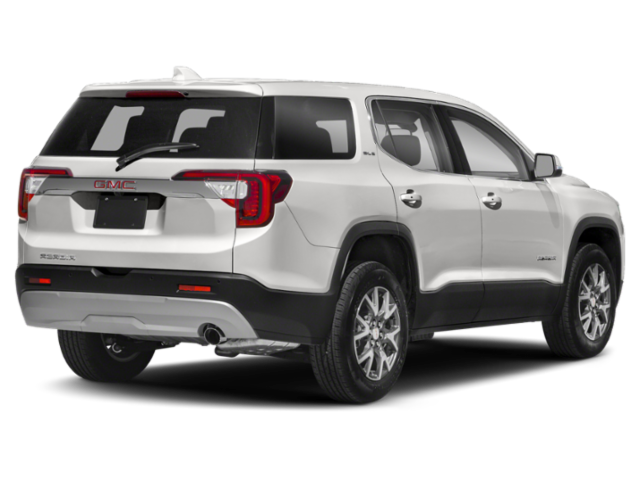
Once upon a time, GMC was a truck and SUV brand, specializing in vehicles that tow, haul, and support adventures to far-flung locations. Now, every car company builds a fleet of SUVs (and, in some cases, trucks), while GMC has adjusted its strategy to provide more pavement-friendly vehicles than it used to.
The updated 2020 GMC Acadia is one of those crossover SUVs, and now it comes in a new AT4 trim level with greater off-roading capability. Other changes include revised styling that gives the Acadia a sharper look, an available turbocharged 4-cylinder engine, a new 9-speed automatic transmission with electronic shift controls, an upgraded infotainment system, a new technology.
Though it remains smaller than the popular first-generation Acadia, the latest model seats up to seven people and offers as much as 79 cu.-ft. of cargo space. Five trim levels are available – SL, SLE, SLT, AT4, and Denali – and the Acadia comes with a choice between three different engines.

For this review, JD Power evaluated an Acadia Denali equipped with all-wheel drive, metallic paint, and the Technology option package. The price came to $52,385, including the $1,195 destination charge.
In the sections that follow, our expert provides his perceptions about how the 2020 GMC Acadia measures up in each of the 10 categories that comprise the J.D Power 2019 Automotive Performance, Execution and Layout (APEAL) Study.
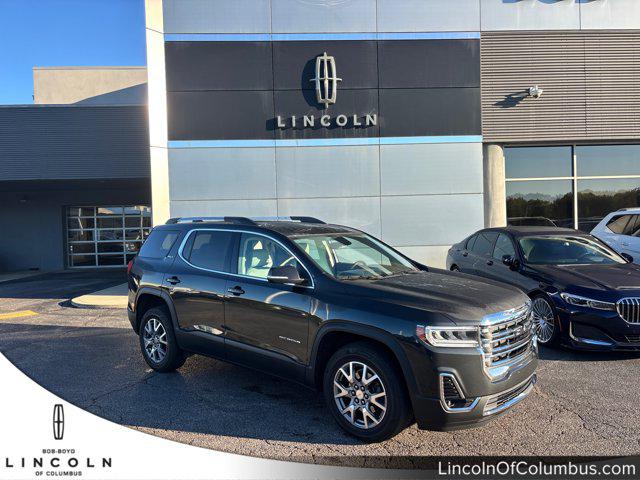
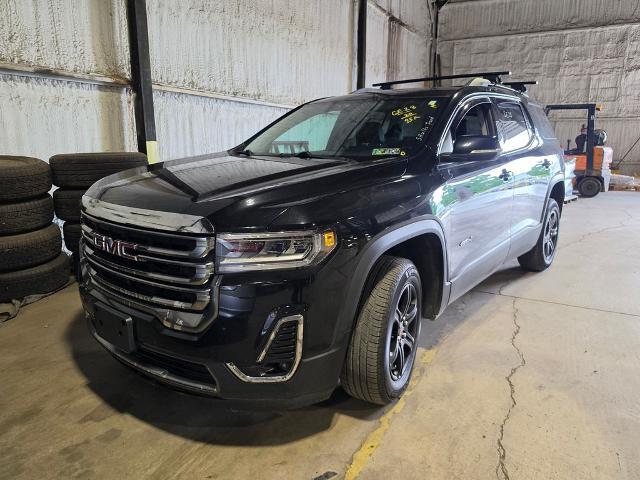
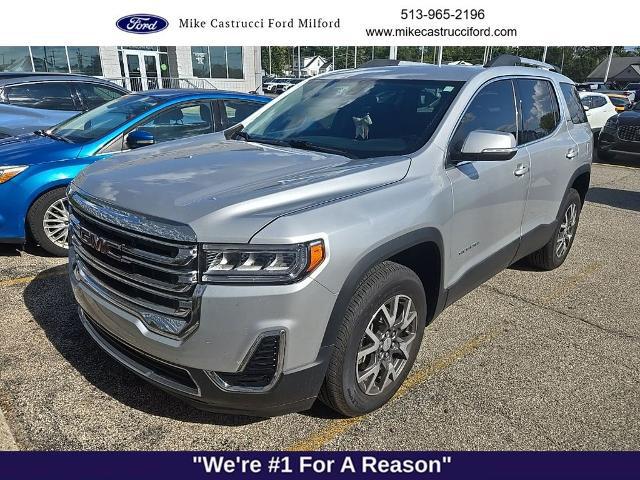
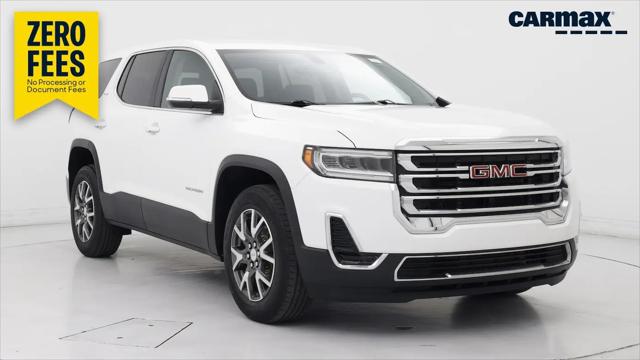
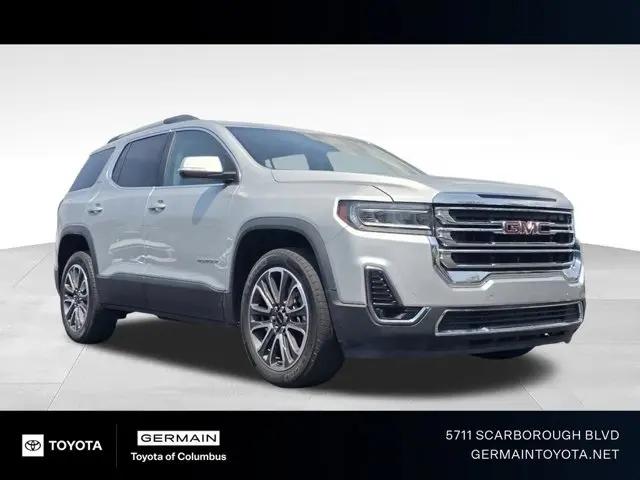
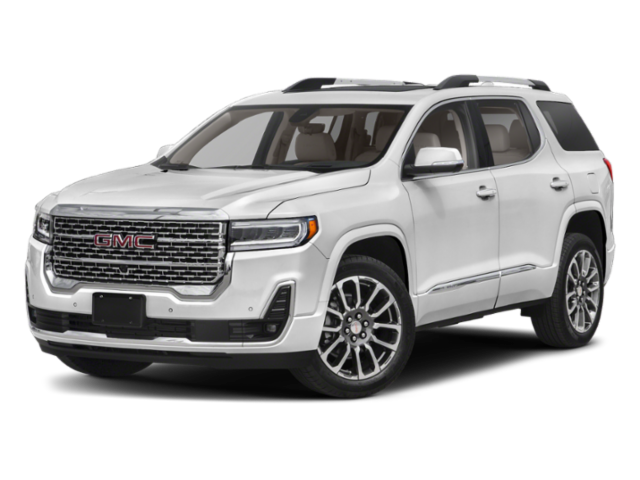
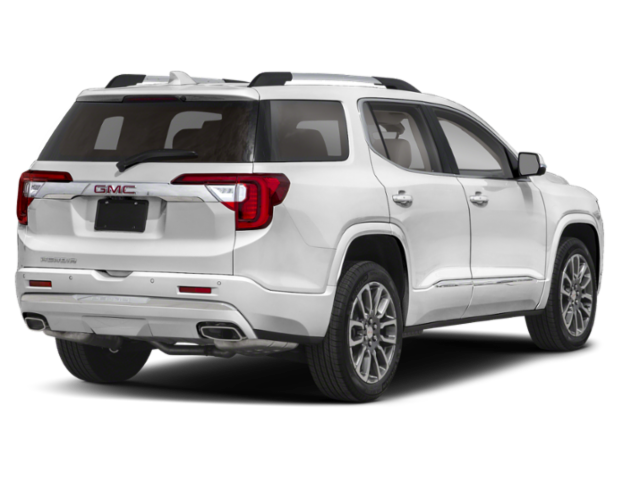
With the arrival of the 2020 GMC Acadia, this midsize SUV is better looking than ever. Sharper styling details eliminate the previous Acadia’s softer look, making it look like a brand-new bar of soap instead of one that’s been used for a week.
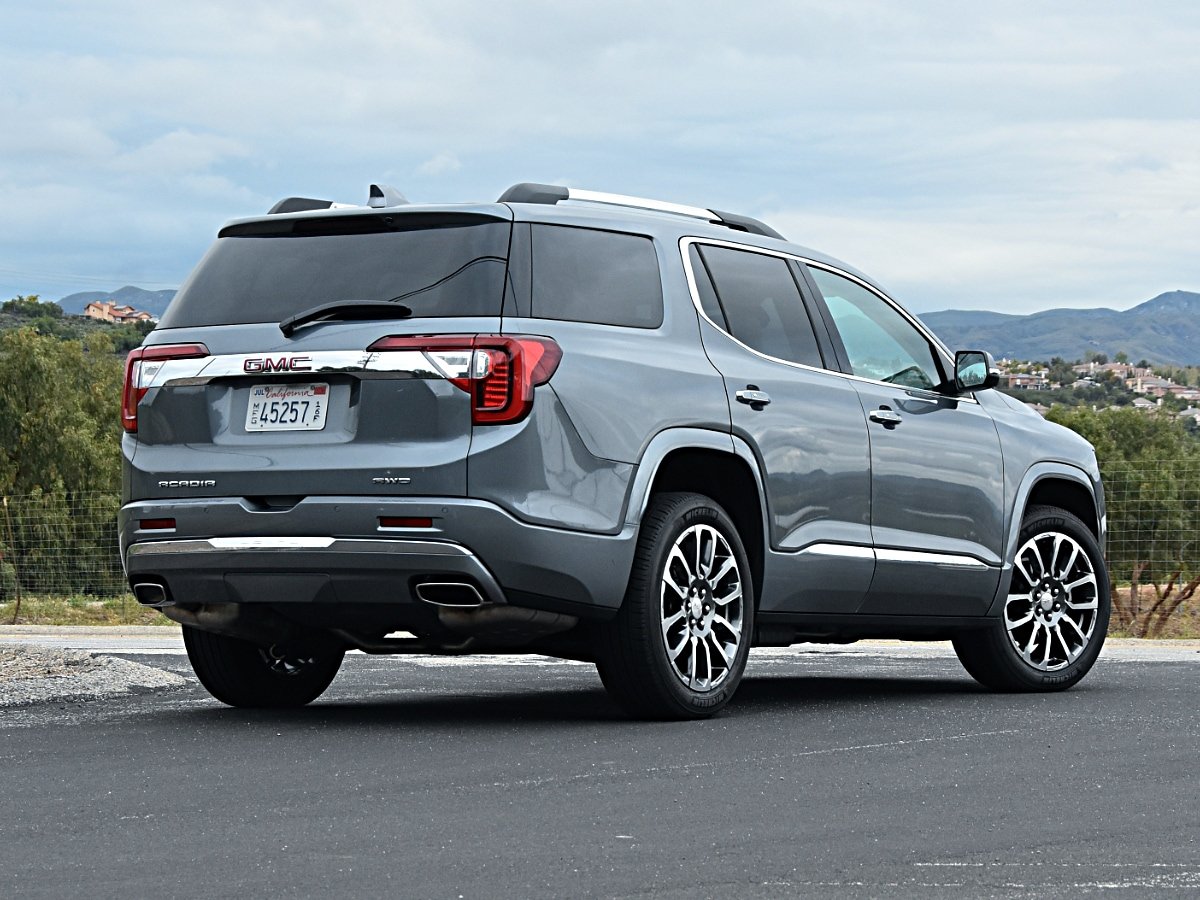
Standard equipment includes LED headlights and GMC’s signature C-shaped running light motif. Denali trim has lots of chrome to signify its status as the luxury model, while the new Acadia AT4 goes with blacked-out trim and black wheels with aggressive all-terrain tires.
In Denali specification, some interior materials are not up to snuff for a vehicle priced north of $50,000.

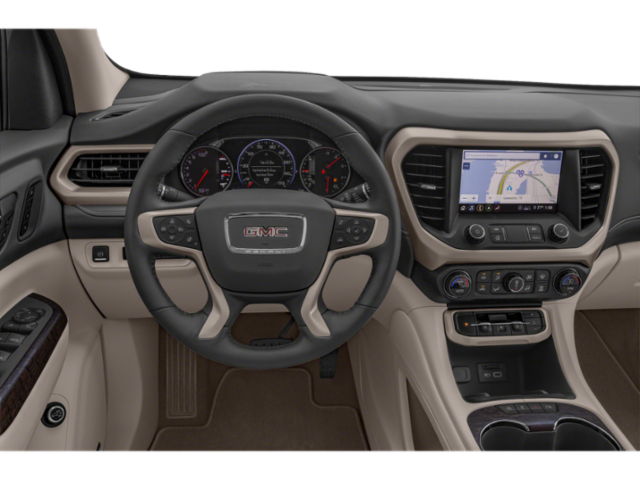
Gloss and grain levels are inoffensive, but neither the real wood trim nor the plastic metal accents are going to win the automotive equivalent of an Oscar. GMC uses soft materials in all of the right places, but even with the test vehicle’s two-tone Dark Galvanized/Light Shale interior and perforated leather upholstery, the Acadia Denali looks bland. The digital center driver information center is just about the most exciting thing within the Acadia's interior.
Quality could use a boost, too. The controls are properly located and easy to use, but they look and feel less refined than expected at this price point. Plus a few obvious build issues with the test vehicle were off-putting.
Depending on the trim level and seating configuration, the 2020 Acadia seats five, six, or seven people.
With Denali trim, leather upholstery, a heated steering wheel, and heated and ventilated front seats are standard. With 10-way power adjustment including for lumbar support, both front seats are wide and comfortable but don’t hold you in place if you take a corner with speed.
Second-row heated captain's chairs are standard in the Denali, and they slide forward and back on tracks to add legroom or cargo room as the situation requires. Passengers seated here will enjoy their own climate controls, USB-A and USB-C charging ports, and a household-type power outlet. A pull-out cupholder set and storage tray is a nice touch, but in the test vehicle exhibited poor fit.
Adults fit into the Acadia's third-row seat for shorter trips. The trick is to move the second-row seats into their middle position to create extra legroom. However, people sitting in this location are awfully close to the tailgate.
Three primary knobs control the Acadia Denali’s triple-zone climate control. The larger ones manage temperature and contain the digital readouts right on the knob itself. The smaller one is the manual fan speed control.
From a user experience point of view, this setup is excellent. However, the panel of buttons surrounding the knobs looks basic and inexpensive, and the climate system isn’t tied into the voice recognition system.
For 2020, the Acadia receives updated infotainment technology that includes the ability to set personal profiles, a reworked connected navigation system with improved destination entry, a digital reversing camera, and a next-generation wireless charging pad.
In terms of user experience, graphics, and response speed, this is an excellent infotainment system. All Acadias include Apple CarPlay, Android Auto, and GMC Connected Services through OnStar with available Wi-Fi hotspot capability. The free trial period to the connected services and Wi-Fi is not particularly generous, though, and the maximum touchscreen size of 8 inches across is increasingly anachronistic.
During testing, the natural voice recognition technology, if a bit slow to respond, proved useful. For a couple of prompts, it took more than one try to get the desired response. The Acadia Denali’s standard Bose premium sound system was decent, but nothing special.
Acadia owners rate storage and space as one of their least favorite things about the SUV, and while the new-for-2020 electronic transmission controls do free up some extra storage space on and beneath the center console, that may not resolve the issue.
The original Acadia was huge inside, even bigger in terms of volume than the more expensive GMC Yukon models. When GMC redesigned it for 2017, the Acadia got smaller, shrinking to a true midsize model in size and space. This change is approach may catch loyal returning customers by surprise.
As far as cargo space goes, the total volume behind the third-row seat measures 12.8 cu.-ft. and, practically speaking, is essentially unusable. Keep the third-row folded down, and the Acadia offers 41.7 cu.-ft. of space, which is a generous amount perfect for families. Maximum volume measures 79 cu.-ft., falling behind some competitors.
Thanks to the test vehicle’s optional Technology Package, seeing out of the Acadia was easy. Looking forward, the squared-off hood helps to place the SUV’s corners, while the video-fed rear camera mirror upgrade provides a panoramic 180-degree view to the rear. A surround-view camera provides a top-down vantage point, the images shown on the infotainment system display.
Every 2020 Acadia includes a blind-spot warning system with rear cross-traffic warning. But, unfortunately, when it comes to other advanced driving assistance systems (ADAS), GMC remains stingy about supplying it to customers with less money to spend.
For example, the SL and SLE trims don't offer forward-collision warning with pedestrian detection or automatic emergency braking at all, and with SLT and AT4 trim those features cost extra. Enhanced automatic emergency braking that works at speeds above 50 mph is exclusive to the pricey Denali. You've also got to upgrade to SLT or AT4 trim to access lane departure warning and lane-keeping assistance, as well as front and rear parking sensors, and a vibrating Safety Alert seat.
While GMC needs to improve its ADAS game, every Acadia comes with a Rear Seat Reminder designed to prevent parents from accidentally leaving a child in the SUV. Teen Driver technology is also standard, providing a driving report card to parents after a teenager borrows the family car, and GMC Connected Services supplies automatic collision notification, SOS emergency calling, and more. The free trial period to these connected services, however, is less than generous.
Safety testing by the Insurance Institute for Highway Safety (IIHS) was incomplete as this review was written, missing results for the Acadia’s headlight performance and small overlap frontal-impact protection for the front passenger’s side of the SUV. In other respects, the Acadia earns favorable marks.
The National Highway Traffic Safety Administration (NHTSA) had not performed testing on the Acadia as this review was written.
For 2020, the Acadia SL and SLE have a 193-horsepower 2.5-liter 4-cylinder engine, while the SLT gains a new turbocharged 2.0-liter 4-cylinder good for 230 hp and 258 lb.-ft. of torque starting from just 1,500 rpm. Both are paired to a new 9-speed automatic transmission.
The Acadia AT4 and Denali versions get a robust 310-hp 3.6-liter V6 engine supplying up to 4,000 pounds of towing capacity. Additionally, the AT4 is the only Acadia equipped with a more sophisticated twin-clutch all-wheel-drive system that makes the best use of the knobby all-terrain tires.
In the Acadia Denali, the V6 and 9-speed automatic are a flawless combination. Acceleration is fast and satisfying, the transmission executes quick and nearly imperceptible shifts, and quiet refinement characterizes this powertrain. In front-drive mode, torque steer is a problem, but switching to AWD mode solves for it.
The new transmission controls, however, take some getting used to. A combination of buttons and switches on the lower dashboard, they’re not always intuitive to use without looking down.
To improve fuel economy, the Acadia has an automatic engine stop/start system and Active Fuel Management technology that allows the engine to run on fewer cylinders such as when cruising or coasting. Drivers can defeat the automatic stop/start if they wish.
As a result, the EPA says the Acadia Denali should return 18 mpg in the city, 25 mpg on the highway, and 21 mpg in combined driving. Driven mainly in its front-wheel-drive mode, the test vehicle averaged 20.1 mpg.
It’s hard to remember driving a GMC Acadia Denali. Aside from slightly rubbery variable-assist steering that is overeager to return to center due to its Active Return Assist feature, there’s nothing remarkable about driving this SUV.
It’s quiet inside at all times. The brakes feel and work the way you want them to. The ride is firm and controlled when necessary yet soft and compliant to filter out surface harshness. It even handled some seriously rumpled and heaved pavement without making a fuss. Neutral handling with good roll control makes it feel a little athletic, even, but not enough to be characterized as fun.
If you’re the type of person who is about the destination and not the journey, the Acadia is your kind of SUV.