18 - 25
375 - 536
8 speed, Automatic w/OD
Intercooled Turbo Gas/Electric I-6, Twin Turbo Gas/Electric V-8
All Wheel Drive, Rear Wheel Drive
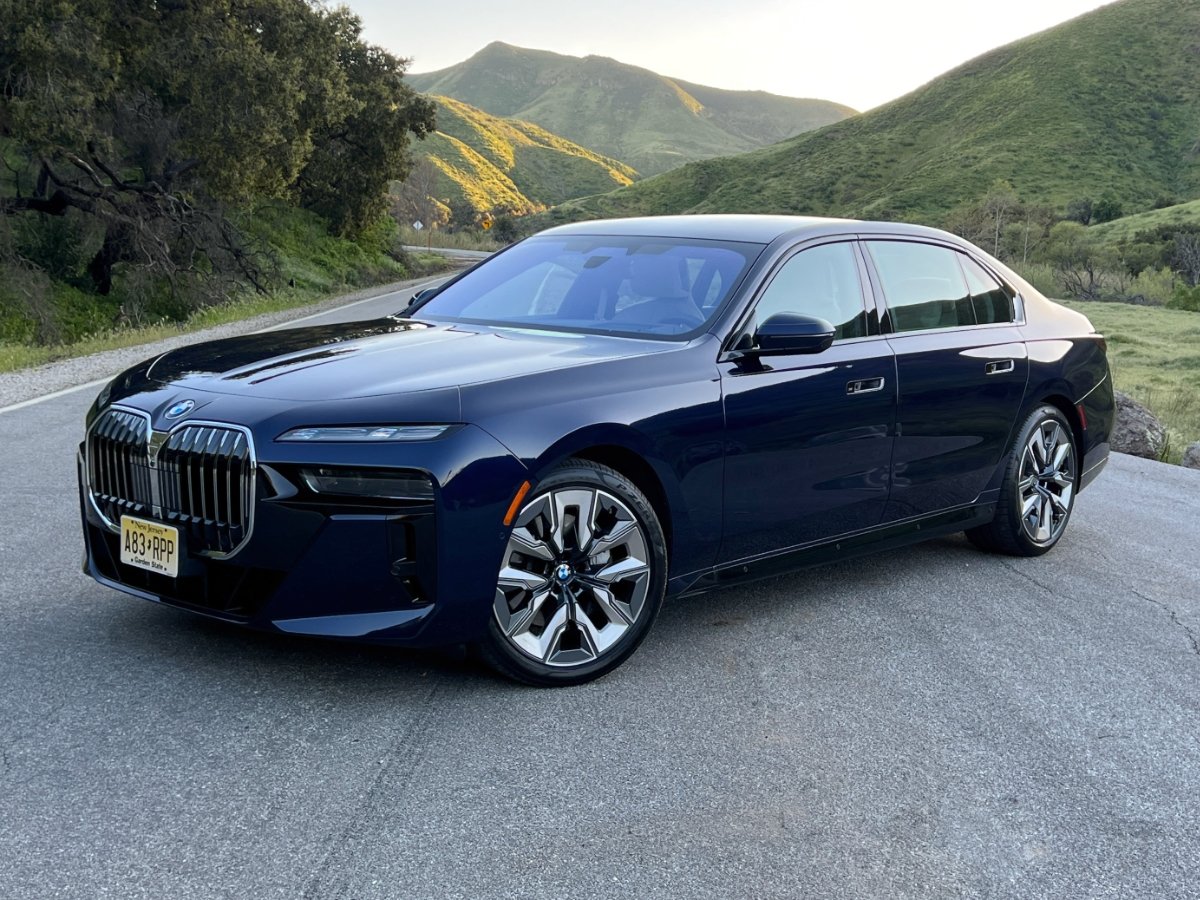
Photo: Christian Wardlaw
The BMW 7 Series competes in the Large Premium Car market segment. According to data collected from verified new-vehicle buyers for the JD Power 2022 Automotive Performance, Execution and Layout (APEAL) Study, 82 percent of new BMW 7 Series buyers are male (matching the segment), and the median age of a new 7 Series buyer is 64 years (vs. 65).
As part of the APEAL Study, owners rated the previous-generation 7 Series in 10 primary categories. Listed below in descending order, you'll find their preferences, from their favorite thing about the vehicle to their least favorite:
In the 2022 APEAL Study, the previous-generation 7 Series ranked third out of five Large Premium Car models.
In the sections that follow, our independent expert analyzes a 740i equipped with the following options:
The test vehicle's manufacturer's suggested retail price (MSRP) was $127,895, including the $995 destination charge.

Photo: Christian Wardlaw
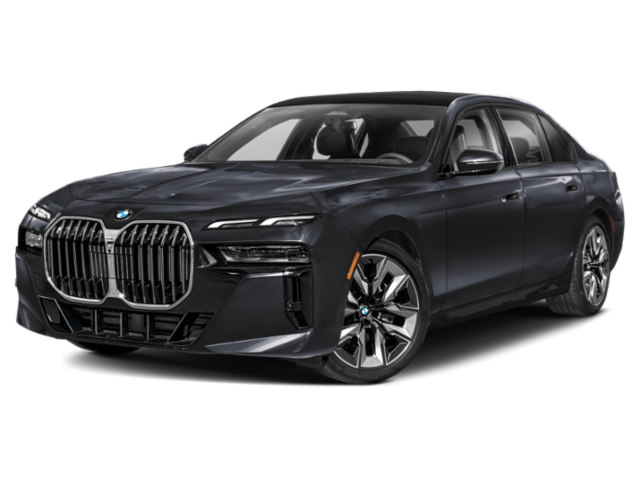
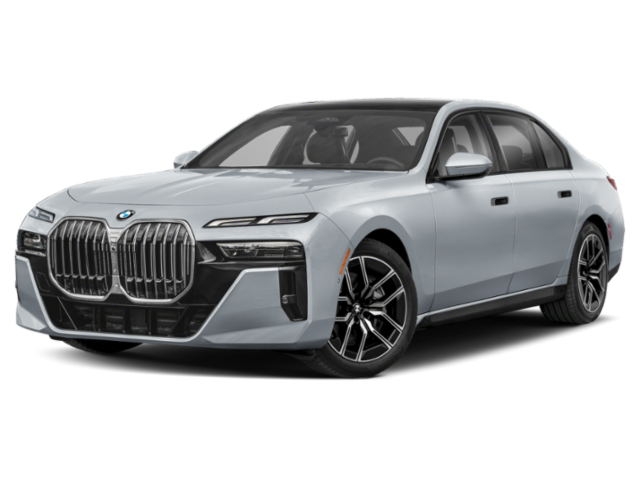
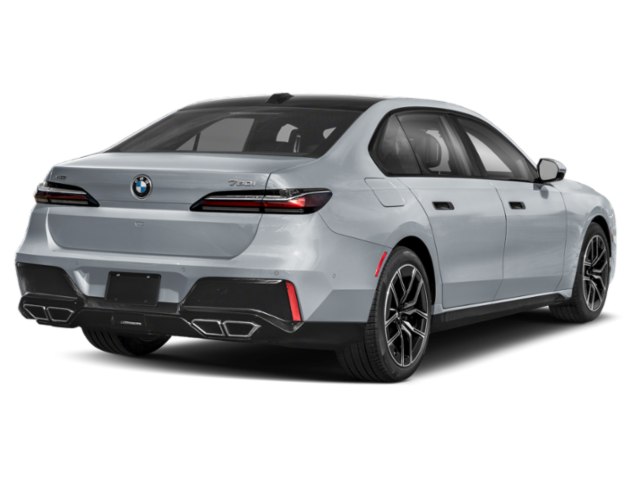
Lately, BMW's design has sparked a love/hate reaction. Now, you can add the all-new 7 Series to the list of controversial models.
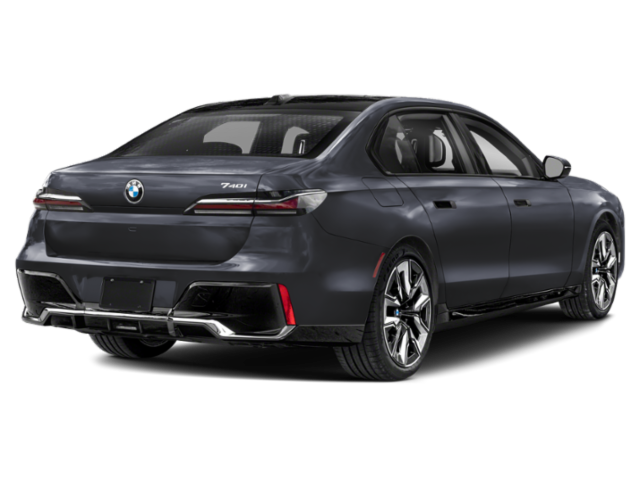
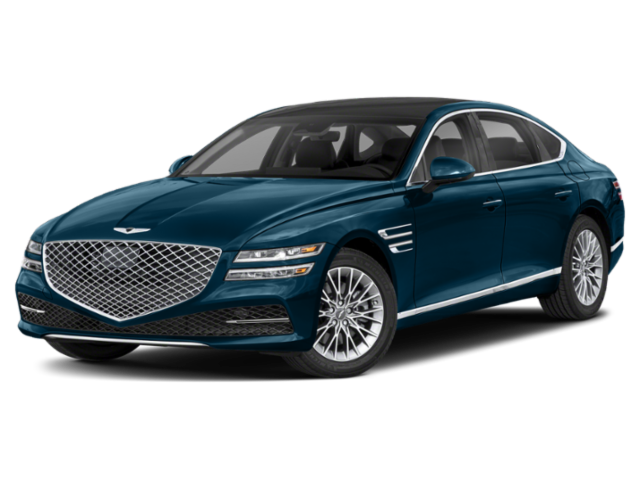
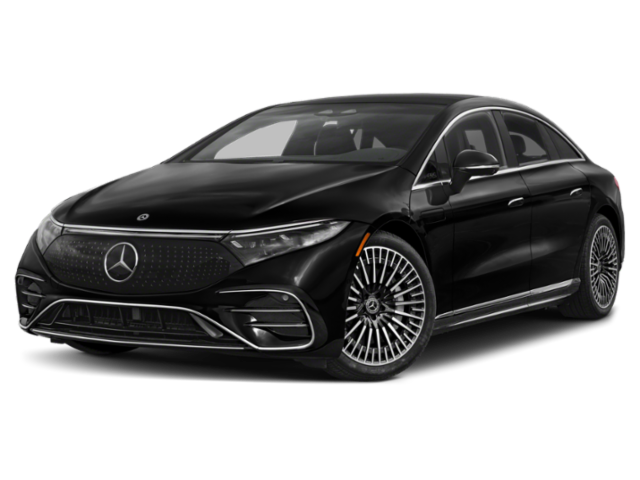
Without dwelling upon what is a personal and subjective topic, I'll admit the new Seven's clean lines and balanced proportions convey the proper stature of a flagship car. However, the smooth, featureless flanks and coldly technical details appear dated, like something from the Soviet era. Also, when viewing the 7 Series from a rear-quarter perspective, I can't shake the proportional resemblance to a late 1990s Chevy Malibu. In this segment, I prefer the Genesis G90 and Mercedes-Benz S-Class.
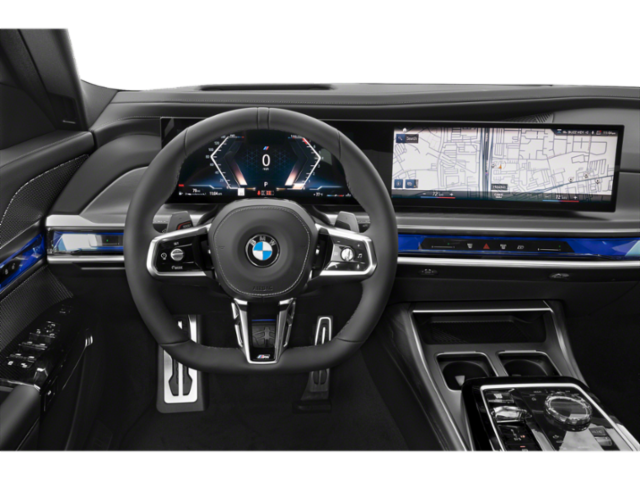
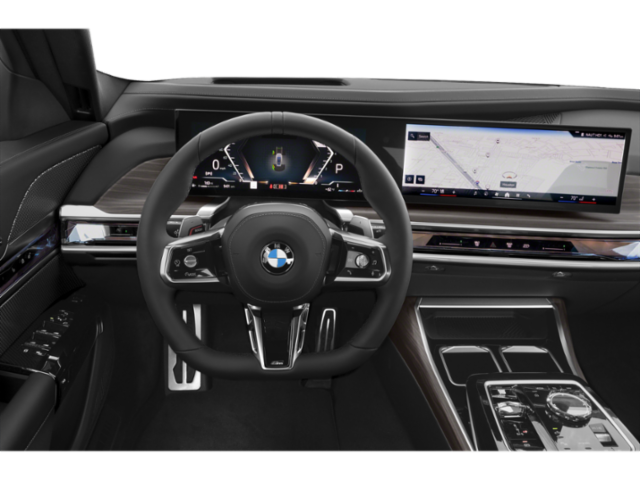
Open the driver's door, and the interior is anything but dated. A BMW Curved Display dominates the upper half of the dashboard, wowing you with full-color, high-resolution graphics. A faceted, transparent trim strip bisects the dash and contains a hidden BMW Interaction Bar with touch-sensing functions. This modern, upscale, decorative trim glows with lovely ambient lighting at night.
My test car had the BMW Individual Composition option with extended premium Smoke White leather, carbon fiber dashboard trim, and an Alcantara suede headliner. Add the metal speaker grilles for the stunning 40-speaker Bowers & Wilkins high-end audio system and Panoramic Sky Lounge glass roof with LED lighting, and my 740i was decadently dazzling.
However, while the reflective interior surfaces and touch-sensing controls look futuristic and sensational, you may experience frustration when trying to find and use them, especially on a bright and sunny day.
In addition, because BMW includes many interior settings within different curated themes, if you adjust from one theme to another, you could experience unintended and unwanted consequences. I recommend using the Personal theme to create one of your own and sticking with it.
Comfort is abundant. The 7 Series has a four-zone automatic climate control system and front seats offering just the right number of adjustments to find a perfect position. They're heated in front, and so is the steering wheel. In addition, ventilated and massaging front seats are available, along with heated rear seats.
The Executive Package adds the front seat massagers and an automatic power door open and close system that is great for impressing people but seemingly not much else. Or, since the point of them is lost on me, perhaps I can't relate to the lifestyle requirement for doors that require no human interaction.
Rear-seat passengers get individual 5.5-inch touchscreens on each door panel. They control a range of standard and available functions, such as the rear climate and infotainment settings. For example, using the touchscreen, a rear-seat passenger can raise the standard rear privacy shades to cover the back window and rear side glass.
My test vehicle's Luxury Rear Seating Package added multi-function rear seats with power adjustment, ventilation, and massage. A large center console armrest makes it appear that the 7 Series has individual rear seats, but it flips up to reveal a fifth seating position. In any case, the 7 Series offers lots of rear-passenger legroom, ideal support, and exceptional comfort.
In addition, the test vehicle had the optional Climate Comfort laminated heat-reflecting glass. When you've parked the 7 Series in the sun, BMW says it keeps the interior cooler, and I can attest that it works. When entering the car on warm, sunny spring days in Southern California, the interior wasn't nearly as hot as expected, especially considering the large glass roof.

Photo: Christian Wardlaw
Every new 2023 7 Series comes with BMW Curved Display technology and a full-color head-up display. The Curved Display houses a 12.3-inch Live Cockpit Pro digital instrumentation panel and an iDrive 8.0 infotainment system with a 14.9-inch touchscreen display. They live side by side beneath a single curved piece of glass.
Several display themes and data configurations are available for the Live Cockpit Pro technology, and the graphics are outstanding. Similarly, you can program the iDrive 8.0 infotainment system to show specific primary widgets, or menu tiles. Importantly, once you've set the 7 Series up to your personal preferences, BMW ID technology can store multiple profiles and configure the car for specific drivers.
Though the 7 Series is a technologically complex automobile, the user interface is surprisingly intuitive, making setting up the features and functions relatively easy. In addition to the touchscreen, you can use iDrive 8.0 via voice commands, gesture controls, and physical controls on the steering wheel and center console.
The infotainment system includes the following standard features:
While I'm a fan of BMW iDrive 8.0, my experience in the new 7 Series perplexed me. Mainly, this was due to the Intelligent Personal Assistant's performance. Typically, this technology performs flawlessly during my evaluations, but that wasn't the case with this example of the 7 Series.
For example, I roused the assistant with a "Hey BMW," followed by a request for directions to the closest Chipotle. Unfortunately, the technology did not understand me, so I modified the request to "Chipotle Mexican Grill." In response to that, I got two potential locations: one in New Jersey and one in Texas. Unfortunately, they were nowhere near my suburban Los Angeles location, nor each other.
Later, mimicking the panic of someone who needs or knows someone who needs immediate medical attention, I said urgently: "Hey BMW, I need to go to a hospital!" The first two choices on the iDrive display were located in Mexico, followed by my local hospital. Hmmmm.
One of my voice testing prompts is: "I want to listen to reggae music." The BMW Intelligent Personal Assist pretended ignorance, despite SiriusXM's channel 19. The tech asked me to request an artist, so I said, "Bob Marley and the Wailers." That modified command still did not change the channel to SXM's Bob Marley station.
Now, with that said, the voice recognition system quickly parsed and accurately responded to all of my other queries and commands. Still, those three strikes against it were unexpected, given the excellence I've experienced in other BMW models.
Speaking of excellence, the test car's optional Bowers & Wilkins Diamond Surround Sound System produces stunning and immersive sound quality. It's a high-end 4D audio system with 40 speakers and 1,965 watts of power and includes details such as 3D surround-sound speakers nestled into the headliner and TrueSurround amplifiers in each head restraint. You can hear and feel the music at unreal levels of quality and clarity, but this option doesn't come cheaply at $4,800.
My test car also had the optional BMW Theater Screen ($4,750). It folds down from the roof like a widescreen television, providing a 31-inch touchscreen display with 8K image resolution, Bluetooth connectivity, 5G connectivity, Amazon Fire TV, and more. Unfortunately, I was unable to pair my iPhone to the Bluetooth. So I turned the evaluation over to my teenagers, who also couldn't easily and quickly get it to work. So they effectively shrugged with a "Meh" and went back to looking at their hand-held devices.
Like the hands-free automatic doors, this gigantic rear-seat theater system strikes me as beyond practical use and utility. It's for showing off, and that's about it. Plus, when deployed, the screen blocks the driver's view to the rear. And since BMW doesn't offer a camera-based, digital rearview mirror for the 7 Series, that's a problem.

Photo: Christian Wardlaw
You might experience cognitive dissonance while driving a new BMW 740i. Sublimely smooth, soft, and quiet during commutes, the 7 Series coddles you in comfort and isolates you from the immediate environment. But, if you drive it with enthusiasm, the 740i handles and performs like a thoroughbred sports sedan, covering ground with effortless speed and unflappable poise. Either way, it is an utterly composed automobile unlike any I've ever driven.
The 740i has a turbocharged 3.0-liter inline six-cylinder engine with a 48-volt mild hybrid system. It produces 375 horsepower and 398 pound-feet of torque, which flows to the rear wheels through an eight-speed sport automatic transmission with paddle shifters and a launch control system. According to BMW, the 740i accelerates to 60 mph in 5.2 seconds.
Granted, that's not as impressive as the 760i xDrive (4.1 seconds) or the i7 (4.5 seconds). However, the powertrain's silky refinement, generous spread of torque and horsepower, and faultless transmission make up for the lack of outright, straight-line speed. In addition, the test vehicle averaged 25 mpg on the testing loop. That's less than the EPA estimate of 27 mpg in combined driving but is nevertheless impressive for a car like this.
Though BMW strives to achieve as near a perfect weight distribution in its cars as possible, the 740i puts 53.2% of its weight over the front tires and 46.8% over the rear. Does this matter? Not with a standard two-axle self-leveling and adaptive damping air suspension.
Despite the test car's 21-inch wheels, the ride was utterly sublime. You can feel the road, but you never actually feel the road, if that makes any sense. The 7 Series provides a decent line of communication while filtering every bit of harshness out. And while you can detect a little bit of squat, dive, and roll in the ride and handling, it feels natural and doesn't detract from the overall driving experience.
In addition, the test car had the Integral Active Steering option, a four-wheel steering system that enhances maneuverability at low speeds while improving stability at higher speeds. In combination with the Parking Assistance Package's surround-view camera system, I found the sizable BMW 7 Series easy to drive and park in urban and suburban situations.
However, for a vehicle designed to ferry important people around, I found it hard to bring the 7 Series to a smooth, clean stop in traffic and in city driving. Upon initial application of the brake pedal, there wasn't much bite. So I would push harder. Then the system would respond with too much braking. Furthermore, as the car came to a stop, the brakes would frequently grab. Overall, the behavior was jarring compared to the otherwise dreamy driving experience.
As quiet, docile, and unassuming as the BMW 7 Series is in most driving situations, the car comes alive when you hustle it on a twisty road. I switched into Sport mode for a trip across the Santa Monica Mountains near Los Angeles, which added a palpable sense of urgency to the driving dynamics while puffing up the seat bolsters and transforming the BMW Curved Display's graphics into a scene resembling Dante's Inferno. Yeah, umm, no thanks, BMW. I just want to drive more enthusiastically, not rouse my inner devil.
Out on the legendary Mulholland Highway, the 740i proved phenomenal. Power from the turbo six seems limitless, the test car's 21-inch wheels supplied outstanding grip, and the magic carpet adaptive air suspension eliminated excess body motion, roll, and wallowing without resorting to a stiff, pounding ride. In addition, the brakes came into their own in this environment, delivering trustworthy, fade and vibration-free slowing and stopping.
Later, while crossing the flat farmland of Ventura County, the 7 Series reminded me how important it is to set the car's speed warning system. You can program it to alert you when the car reaches a specific velocity, and it serves as a reminder that you're potentially jeopardizing your driver's license. In the 7 Series, you need it. At 75 mph, the car suffers hardly any noise within the cabin and feels as though it is crawling along at half that speed.

Photo: Christian Wardlaw
If you expect the redesigned 2023 BMW 7 Series to include all the advanced driving assistance systems (ADAS) in the automaker's arsenal as standard equipment, you'll be disappointed.
Instead, it comes with the following:
You must buy the optional Driving Assistance Professional Package if you want more tech. It adds:
In addition, you can upgrade the 7 Series with a Parking Assistance Package:
Every feature I could safely evaluate worked well, except for the Highway Assistant. This feature proved unintuitive, and referencing the owner's manual did not help.
So, what's the issue? There is a communication problem between the car and the driver. While driving on a local freeway, and after turning all the ADAS on, the digital instrumentation panel indicated "Assist Plus Ready." That suggested that the tech was ready to rock, and all I needed to do was take one more step to activate it. However, that added step wasn't clear.
At one point, I glanced down at the instrumentation panel and momentarily saw "Assisted Driving Mode," accompanied by a green steering wheel icon. A message stating that I could release my foot from the accelerator pedal followed that notification. However, these visual messages lasted mere seconds and disappeared.
Thinking the tech had finally performed the final step to initiate hands-free driving, I let go of the steering wheel. But, unfortunately, moments later, the system requested that I put my hands back on the steering wheel.
In hindsight, the "Assisted Driving Mode" notification likely indicates that the adaptive cruise control and lane-centering assistance are active, but you still need to hold the steering wheel. So, the question remains: When the 7 Series tells you "Assist Plus Ready," how do you activate Assist Plus? I never figured it out.
In BMW's defense, I would not be surprised to learn that I am at fault here. Likely, I failed to activate a setting within iDrive 8.0, or I forgot to turn something on that is necessary for Highway Assist to work. After all, some car companies will put the lane-keeping assistance function on the tip of the turn signal stalk, where it is virtually invisible to the driver, so it's easy to miss that detail.
Still, I've used ADAS tech from rival automakers ranging from Acura's Traffic Jam Assist to Volvo's Pilot Assist, and I'm confident that BMW has some work to do on Highway Assist. For example, it's not nearly as intuitive to use as Cadillac Super Cruise or Ford BlueCruise, nor is it as communicative about what is happening and why.

Photo: Christian Wardlaw
According to BMW, the 7 Series can carry 19.1 cubic feet of cargo in its trunk. Admittedly, the space doesn't look that big, but it could be an optical illusion related to the trunk's height. Nevertheless, you can stow full-size suitcases on their sides.
In addition, my family packed a week's worth of luggage into the trunk for an airport run, discovering that roll-aboard suitcases fit upright in the BMW's cargo area.
According to the EPA, the BMW 7 Series's fuel economy rating is 27 mpg in combined driving. Unfortunately, my test car fell short of that, averaging 25 mpg on the evaluation loop. Nevertheless, based on that real-world result and the 19.5-gallon fuel tank, a 7 Series should easily travel 450 miles between stops at the gas station.
With a curb weight of 4,594 pounds and a brand-new vehicle architecture fortified with the latest collision avoidance and protection systems, the 2023 BMW 7 Series is likely a safe car. However, since it is unlikely that the National Highway Traffic Safety Administration (NHTSA) or the Insurance Institute for Highway Safety (IIHS) will perform crash tests on a 7 Series, this question may remain unanswered.
Depending on the model you choose and the options you add, a 2023 7 Series costs anywhere from $96,695 for a base 740i to the mid $150,000s for an i7 with all of the options. These values include the $995 destination charge.
In the JD Power 2022 Initial Quality Study (IQS), the previous-generation BMW 7 Series ranked highest in the Large Premium Car segment. Other models in the vehicle class did not rank in the study.
In the 2022 APEAL Study, the Mercedes-Benz EQS ranked highest in the Large Premium Car segment. The next highest-ranked models were the Mercedes-Benz S-Class and the previous-generation BMW 7 Series.
Other competitors to the 2023 7 Series include the Audi A8, Genesis G90, Lexus LS, Lucid Air, Maserati Quattroporte, and Volvo S90.

Photo: Christian Wardlaw
Almost everything about the 2023 BMW 7 Series is terrific, but the automaker fumbles with the Highway Assist hands-free driving technology. It isn't obvious how to activate it, if and when it activates, or why it isn't activating.
Again, I may have been at fault for failing to activate Highway Assist. However, I attempted to use this feature multiple times on several Southern California limited-access highways and freeways, and I don't believe it ever turned on.
In addition, after checking the owner's manual, it still wasn't clear what to expect from the tech.
Furthermore, this wasn't my first rodeo with hands-free driving tech, so I can only compare my experience with the BMW to what Ford and General Motors offer and rate it substandard, even if only from a user-experience perspective.
Aside from the Highway Assist confusion and frustration, the odd responses from the Intelligent Personal Assistant to some of my voice commands, and my family's inability to use the rear-seat theater system, the new 2023 7 Series rates as the greatest and most technologically advanced luxury sedan I've ever driven.
My advice? Skip as much of the available tech as possible, and you'll likely be happier owning this utterly sublime and sophisticated automobile.
Christian Wardlaw is a veteran automotive journalist with nearly 30 years of experience test-driving vehicles. He began his career at Edmunds and now owns Speedy Daddy Media, Inc., an automotive content creation company serving several automotive publishers. In addition to JDPower.com, his work has appeared in numerous new- and used-car buying guides, newspapers, and automotive industry trade journals.