In the sections that follow, our expert provides his own perceptions about how the Ford Edge measures up in each of the 10 categories that comprise the 2018 APEAL Study.
Exterior
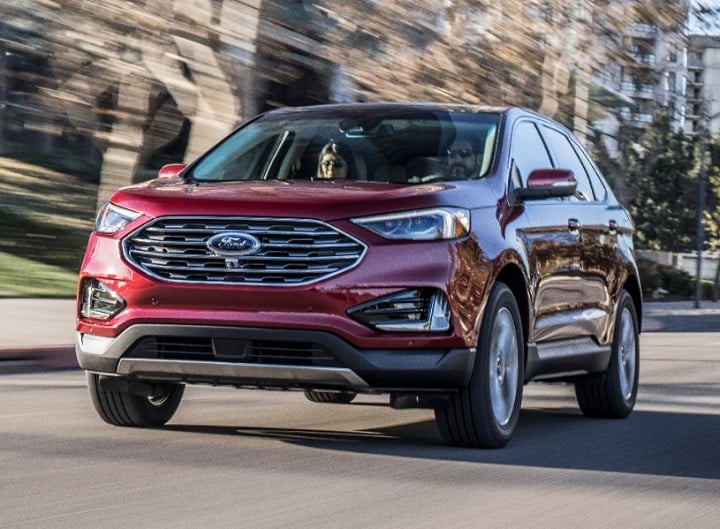
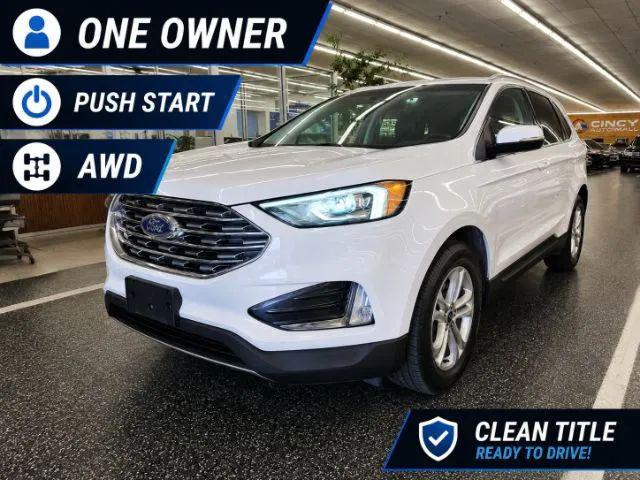
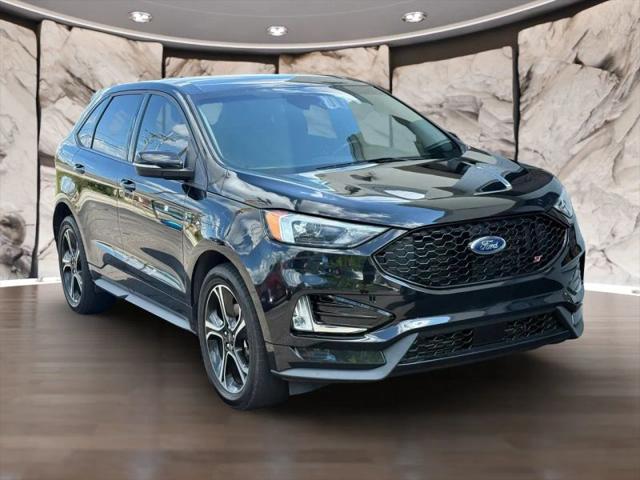
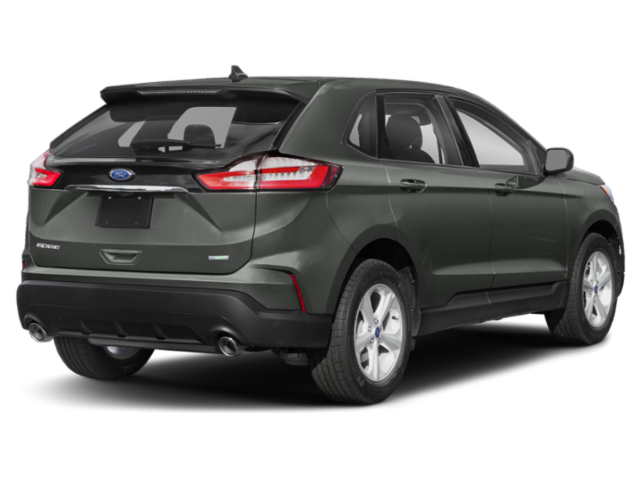
Ford modifies the Edge’s styling details for 2019, but depending on the viewing angle this remains an awkwardly proportioned SUV.
Based on a front-wheel-drive platform, the Edge carries a significant amount of visual weight forward of the front wheels. This – combined with an abbreviated hood, massive windshield, and stubby fastback rear end with a short rear overhang – almost makes the Edge resemble a van instead of an SUV.
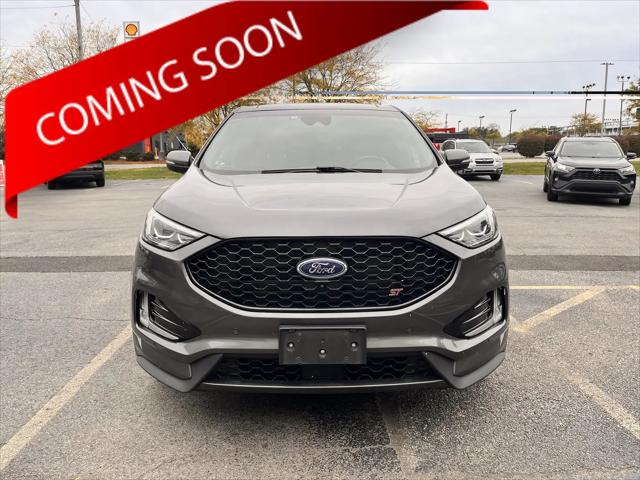
With that said, the Titanium Elite test vehicle looked just about as upscale as an Edge can. The unusual Stone Gray paint (a mix of silver and tan) worked well with the Elite package’s exclusive 20-inch aluminum wheel design.
Overall, the Edge’s design elements are appealing. The Picasso-like proportions, however, require acclimation.
Interior
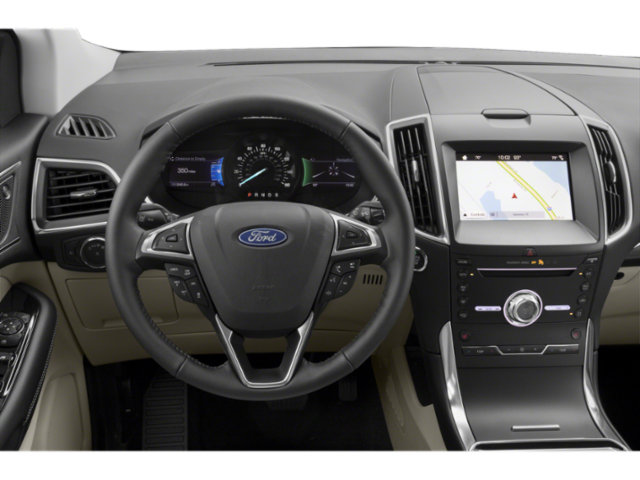
At first glance, the Edge’s interior looks cohesive, even minimalistic. For example, on the center control panel, which falls gracefully into the center console, there is plenty of “white space” between the buttons, knobs, and rocker switches.
However, in use, the busy control stalks, the topographically indistinguishable steering wheel buttons, and the U-shaped collection of climate buttons wrapped around the stereo controls can cause confusion. Jarring air vent designs also detract from the cabin’s ambience.
Materials quality, however, is excellent. Certainly, the test vehicle’s Titanium Elite fittings contribute to this perspective, but even the hard plastic panels have an appealing texture and finish.
Seats
Comfort is easy to find inside the Ford Edge Titanium. Equipped with a power adjustable steering wheel, two power-operated front seats with height and cushion angle adjustment, and both heating and ventilation, the test vehicle was a great place to spend time. Softly padded places for elbows, including the upper door panels, also contributed to satisfaction on long drives.
The back seat offers plenty of legroom and space for feet, and offers enough thigh support to satisfy adults. Air conditioning vents keep occupants cool, and the test vehicle’s outboard rear cushions were heated, too. The front seatbacks are fully padded for added comfort, helpful when carrying people more than six feet tall.
Climate Control System
Equipped with a dual-zone automatic climate control system, as well as heated and ventilated front seats and a heated steering wheel, the Edge test vehicle was ready for any kind of weather. Seasonable spring temperatures in Southern California did not tax the system, but past experience with Ford climate systems during cold snaps and heat waves gives no reason for concern.
As mentioned previously, Ford arranges the climate controls in a U-shaped pattern on the center control panel, surrounding the stereo controls. Most people will use the automatic function, occasionally adjusting temperature or activating the seat heating and cooling. Remaining buttons are circular, small and might prove hard to read, making infrequently accessed functions difficult to find and use.
Better grouping of and separation between the climate and stereo controls would be helpful. But then the interior wouldn’t look quite as stylish.
Infotainment System
Aside from taking a long time to load after starting the Edge, Ford’s Sync 3 infotainment system proved pleasing to use.
Though the 8-inch display screen is small by modern standards, modern and bright graphics, useful virtual buttons, smartphone-style swipe and scroll functionality, and useful voice recognition technology makes it relatively painless. The Home screen shows the navigation map, radio information, and phone detail at the same time.
The test vehicle had a 12-speaker B&O Play sound system, a lower end premium setup from Bang & Olufsen and Harman. It sounded terrific, given the under-$50,000 Edge Titanium Elite’s price tag.
Storage and Space
There is no shortage of storage space inside of the Ford Edge. From a handy smartphone slot next to the cupholders to a covered bin under the climate controls, it can handle whatever you’ve brought into the SUV. And don’t forget about the hidden tray underneath the center console.
Wave your foot under the Edge Titanium’s bumper, and the power liftgate opens to reveal a roomy 39.2 cu.-ft. of cargo space. Fold the back seat down to expand volume to 73.4 cu.-ft.
Visibility and Safety
Equipped with wide windshield pillars and thick rear roof pillars, the Edge is harder to see out of than some midsize SUVs.
A standard reversing camera and blind spot monitoring system with rear cross-traffic alert helps, as well as an available forward-view camera, optional parking sensors, and extra-cost semi-autonomous parking assist technology. Nevertheless, even with these features, I found it hard to accurately place the Edge, especially when parallel parking.
Equipped with standard Ford Co-Pilot 360 systems, every 2019 Edge features helpful driver assistance and collision avoidance technology. A Co-Pilot 360 Assist+ option package adds active features including adaptive cruise control, lane centering assist, and evasive steering assist.
During testing, I found the Co-Pilot 360 Assist+ package’s adaptive cruise and lane centering functions in need of refinement. In moderate traffic, the cruise control continually braked and accelerated to maintain speed and distance, while the lane centering system behaved in an uncertain fashion, like it wasn’t able to see far enough ahead for smooth and confident operation.
Crash-test ratings improve for 2019. Though Ford hasn’t specified structural modifications, the latest Edge gets top marks in crash-avoidance and crash protection from the Insurance Institute for Highway Safety (IIHS). Unfortunately, due to sub-standard headlights, the Edge does not earn a “Top Safety Pick” rating.
Engine/Transmission
For 2019, the Edge gets a standard turbocharged 2.0-liter 4-cylinder engine paired with a new 8-speed automatic transmission with a Sport driving mode. Run it on premium fuel, and it makes 245 horsepower at 5,500 rpm and 275 lb.-ft. of torque at 3,000 rpm. All-wheel drive is optional with the powertrain.
Choose the Edge ST, and you’ll get a brilliant twin-turbocharged 2.7-liter V6 engine cranking out 335 hp at 5,550 rpm and 380 lb.-ft. of torque at 3,250 rpm. The ST gets standard AWD, along with other mechanical modifications that make it genuinely fun to drive.
The Edge Titanium test vehicle had the turbocharged 4-cylinder. In normal driving mode, this engine delivered uneven response from a stop, sounding and feeling indecisive as to what it was supposed to be doing. There are two potential explanations for this behavior:
- Turbo lag
- An 8-speed automatic transmission attempting to maximize fuel economy.
Likely, both contribute to this dissatisfying sensation of engine stumble. Switch to Sport mode to eradicate this irritating character trait, but fuel economy will suffer. Also, each time you re-start the Edge, it will be in normal mode, so you’ll need to remember to switch to Sport mode.
Otherwise, I have no complaints about the Edge’s standard drivetrain. And because I am a fan of rotary shifters, that new design element, located on the center console, isn’t an issue for me.
Fuel Economy
On my testing loop, I used Sport mode for a third of the city driving, and while hustling the Edge across mountains. The remainder of the time I used normal mode.
With that in mind, the Edge averaged 19.5 mpg. That’s not close to the EPA’s official estimate of 23 mpg in combined driving. It’s not even close to the city rating of 21 mpg. And given how dissatisfied Edge owners already are with their SUV’s fuel economy, that sentiment is unlikely to change.
Turbocharged 4-cylinder engines are great at posting impressive EPA numbers. And they’re great for delivering the power of a bigger engine in a smaller and theoretically more efficient package. The problem is that they rarely do both at the same time.
Driving Dynamics
Like most two-ton midsize crossover SUVs that sit up high off the road, the Edge exhibits plenty of what is known as “head toss.” That when the driver or the passengers feel jostled from side to side as the vehicle rocks on its suspension, the direct result of the higher center of gravity inherent in an SUV.
Aside from this, and steering that feels too light and eager to return to center on curvy roads, the Edge is pleasing to drive. Quiet, with an excellent blend of ride compliance and handling control, this SUV makes daily driving more enjoyable.
Tackle a twisty road in the Edge Titanium, however, and the all-season tires limit the potential for fun. I’d strongly advise people with a need for speed get the racy and raucous Edge ST, which can plaster a big smile on a driving enthusiast’s face.