The Hyundai Veloster N is the only version of the Veloster that rolls into 2022.
SelectBrowse Listings
The Hyundai Veloster carries over into 2021 relatively unchanged.
SelectBrowse Listings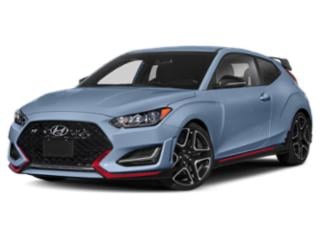
After its introduction last year, the Veloster carries over into 2020 relatively unchanged. A blind spot collision system with rear cross traffic alert is now standard on the Turbo R spec and above, while wireless charging now comes on all Turbo cars. In addition, exterior features that were optionally painted flat black, such as the grille and front fascia accents will now be painted gloss black instead for 2020.
SelectBrowse ListingsThe second-longest running nameplate in the Hyundai line-up, the Elantra first appeared in the United States for the 1992 model year. Debuting as a four-door compact car, the Hyundai Elantra was initially featured Mitsubishi engine power. The Elantra received its first update in 1995 featuring a longer 100.4-inch wheelbase and a more rounded exterior appearance. By 1998, the five-passenger Hyundai Elantra was offered as a four-door sedan or a wagon body style powered by a 130-horsepower 1.8-liter four-cylinder engine. Trim level choices for 1998 consisted of a base or GLS with dual airbags and an audio system with cassette player serving as standard features for the vehicle.
1998 Elantra GLS models received four-wheel disc brakes and power windows. The 1999 Hyundai Elantra received a redesigned grille and a more potent 2-liter engine generating 140 horsepower and 133 pound-feet of torque. For 2001, the Hyundai Elantra underwent a complete reengineering sporting an all-new look. The Hyundai Elantra sedan returned while a hatchback called the 2001 Elantra GT replaced the wagon version of the vehicle (the addition of an Elantra GT sedan in 2003 would result in it being called a hatchback in later years). Side airbags, power windows, power door locks and air conditioning were promoted as standard features for all 2001 Hyundai Elantras.
For 2004, the Elantras engine received continuously variable valve timing accompanying a mild facelift to the vehicles appearance. A completely redesigned Hyundai Elantra emerged for 2007 with a new look and greater interior space. For 2009, a wagon-like hatchback version of the Elantra returned to the United States line-up called the Touring model. 2011 brought some striking changes for the Hyundai Elantra. Presented with a sophisticated compact sedan appearance featuring a 0.28 drag coefficient, the 2012 Elantra came with a revised powertrain.
See the latest and greatest features of the newly redesigned cars, trucks and SUVs headed to a dealer near you. Search by car manufacturer or specific models to get an in-depth preview of the latest tech, specs, features and photos for the latest model year.