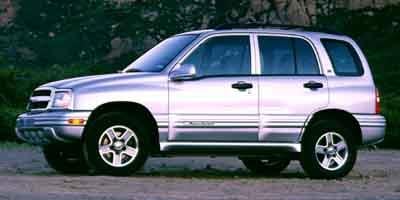
A compact sport utility vehicle constructed in co-operation with Suzuki, the Chevrolet Tracker featured an attractive price and available four-wheel drive. Prior to 1998, the Tracker was part of the small-car oriented Geo brand. Featuring a convertible soft-top two-door and a hardtop four-door variant, the 1998 Chevrolet Tracker was equipped with a cabin large enough to fit four adult passengers. Powered by a 1.6-liter four-cylinder engine producing 95 horsepower and 98 pound-feet of torque, the 1998 Tracker was available with two-wheel or four-wheel drive train. The Chevrolet Tracker’s full-time four-wheel drive system was designed for serious off-road performance. Air conditioning and dual front airbags were standard on the 1998 Tracker.
For 1999, a number of changes appeared on the Chevrolet Tracker. In addition to a revised front headlamp and grille design, the compact sport utility vehicle received a rack and pinion steering system delivering better on-road turning control. An optional powerplant was also added to the 1999 Tracker in the form of a 120-horsepower 2.0-liter engine. The larger engine became standard power for 2001 while an all-new V-6 engine was introduced as the Chevrolet Tracker’s optional powerplant. Generating 155 horsepower and 160 pound-feet of torque, the 2.5-liter V-6 engine was only offered on the four-door version of the 2001 Tracker. The 2001 model year also introduced Chevrolet’s ZR2 off-roading package giving the Tracker an eight-inch ground clearance and skid plates for enduring rough trails.
During the Chevrolet Track’s final year of production in 2004, buyers were limited to the four-door model powered by a standard V-6 engine. Production of the Chevrolet Tracker ended after the 2004. 11 years after the last Tracker was sold, Chevrolet re-entered the compact utility vehicle market with the Trax crossover.
See the latest and greatest features of the newly redesigned cars, trucks and SUVs headed to a dealer near you. Search by car manufacturer or specific models to get an in-depth preview of the latest tech, specs, features and photos for the latest model year.