See answers to common EV questions, tax incentives, charging maps & more.
Explore EV18
25
348
8 speed, Auto-Shift Manual w/OD
Twin Turbo Premium Gasoline V-6
All Wheel Drive, Rear Wheel Drive

Photo: Tim Stevens
When the new edition of the Panamera, which Porsche internally calls the G3, goes on sale later in 2024, it will be available in five trim levels. On the low end is the base Panamera, a rear-wheel-drive (RWD) model with a starting price of $99,900. That will also be available as a plug-in hybrid as the Panamera E-Hybrid, starting at $115,500. The all-wheel drive (AWD) Panamera 4 E-Hybrid starts at $126,800. Finally, there’s the Panamera Turbo E-Hybrid, though Porsche hasn’t set the formal price on that one just yet.
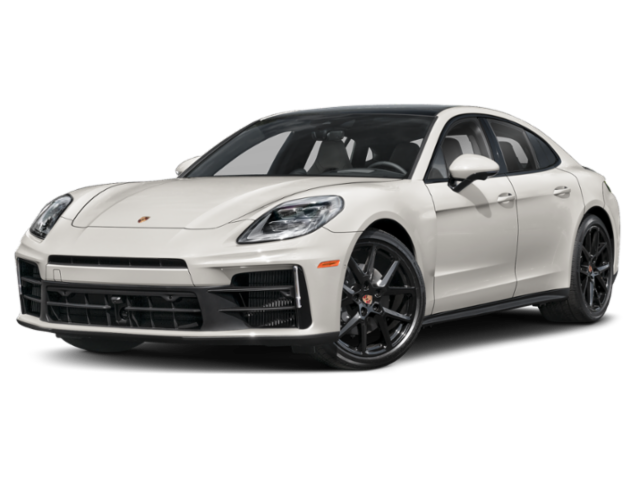
At the car’s launch in Seville, Spain, I drove a Panamera 4 with a healthy set of options, including Carrara White Metallic paint, a black leather interior, the Sport Chrono package, and larger, 21-inch wheels. The final price was $138,600, including the $1,650 destination charge.

Photo: Tim Stevens
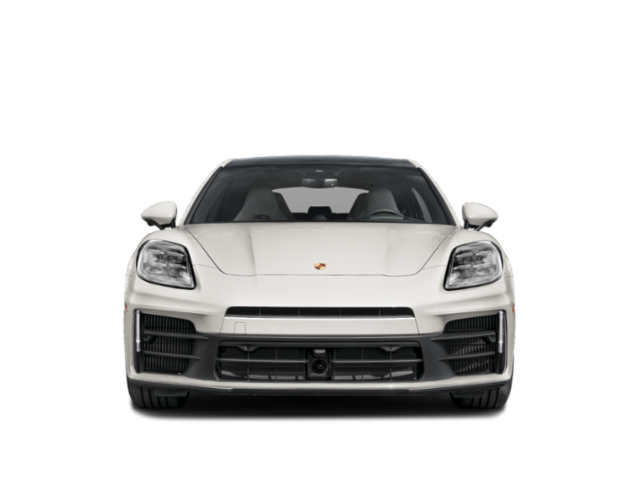
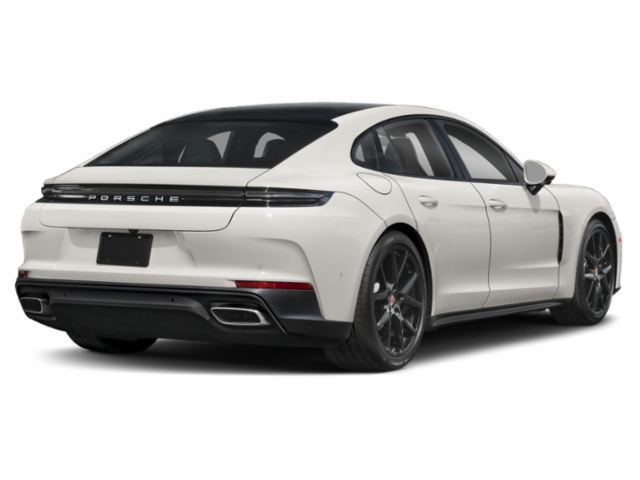
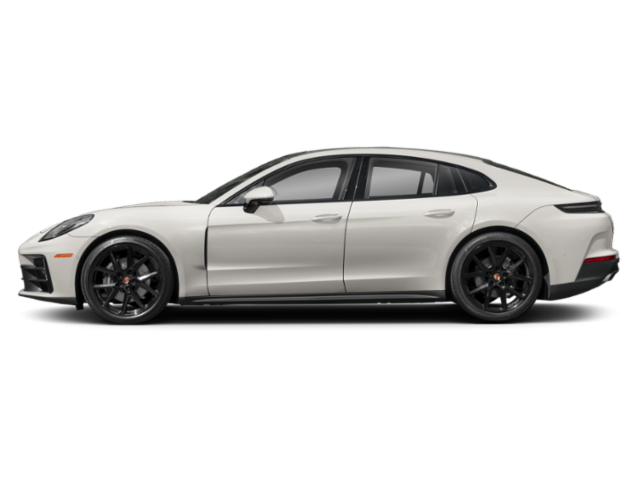
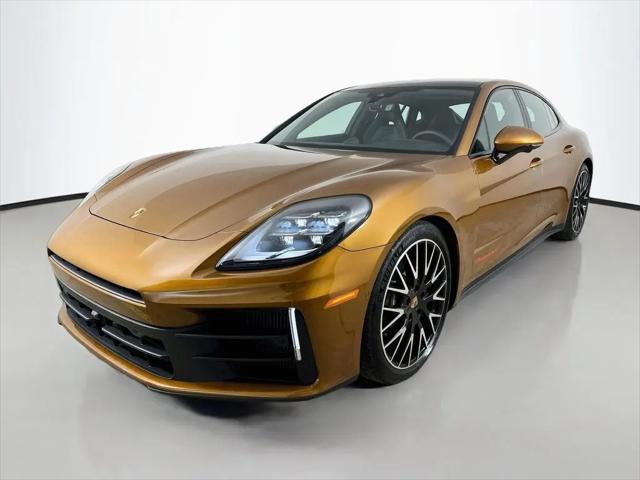
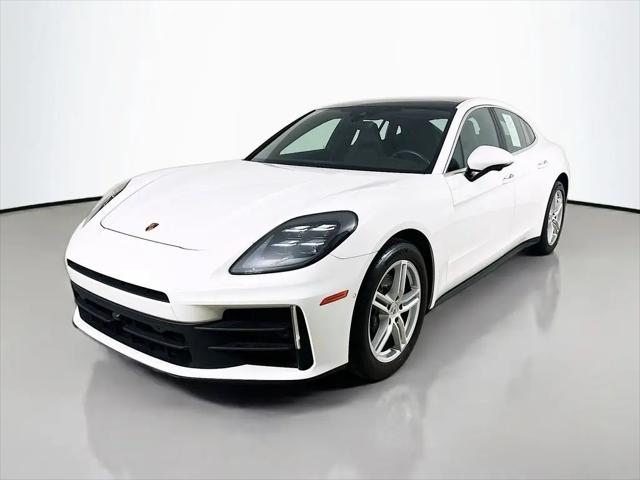
From the outside, at a casual glance, you might have difficulty identifying the new Panamera from the previous version. While the previous-generation Panamera was a big update over its predecessor, this version takes a decidedly more evolutionary step. Overall proportions are a bit more upright, styling more pronounced, especially regarding the headlights, but it’s much the same formula. However, the third-generation Panamera looks all-new from behind the steering wheel, seated in the driver’s seat.
Familiar if you’ve been in a Taycan or a Cayenne lately, the gauge cluster is now a 12.6-inch display, subtly curved and boasting great contrast and brightness. It’s a big upgrade over the previous Panamera. It’s also hugely customizable, with numerous views and reconfigurable panels, meaning that if you’re a data hound, you can set it to show all the data you could ever want. If you’re more traditional, you can also present just a big old tachometer in the middle.

Photo: Tim Stevens
To the right of that new gauge cluster is a 12.3-inch central touchscreen running the Porsche Communication Management (PCM) system. Visually, PCM is a bit utilitarian, but it offers plenty of functionality, including navigation, Bluetooth streaming, and integrated Spotify and Apple Music. It’s also generally very responsive, but things were occasionally quite sluggish on the new Panamera, especially when pulling up the climate controls. Hopefully, that gets fixed before the car enters full production.
Thankfully, while the Panamera has lost a fair few buttons since the last generation, you still have enough to adjust temperature and seat heating and cooling without waiting on that touchscreen. The bulk of the controls, though, are now virtual on that display.
Some will lament that continued slide towards all-touch everything. Still, those fully onboard with the touchscreen trend can add yet more touchscreens, including a 10.9-inch unit on the far right of the dashboard for the passenger and another small display out back between the seats for the rear passengers to surely ignore.
The new Panamera gets some nice upgrades in the active safety department to protect vehicle occupants. Adaptive cruise control with full-stop is standard, now augmented with a traffic-sign recognition system and the ability to adjust speed automatically to suit. A basic lane-keeping assistance system is also standard, but step up to the InnoDrive package and get full lane-centering assistance, plus automatic emergency steering and adaptive cruise with stop-and-go functionality.
The base adaptive cruise system worked well, spotting traffic without issue and adjusting speed, even bringing me down to a complete stop when I hit some morning rush-hour traffic. The lane-keeping assistance system also worked reliably, identifying even poorly painted lines in varying light conditions. The system does, however, provide a late and abrupt adjustment, waiting until the car is straying close or partially over the line before delivering a nudge on the steering wheel to bring the car back to center.

Photo: Tim Stevens
The new Panamera has more power than ever, regardless of your chosen trim. The base Panamera comes with a turbocharged 2.9-liter six-cylinder engine that, for the 2024 model year, makes 348 horsepower and 368 pound-feet of torque. That’s up from 325 hp and 331 pound-feet in the previous generation.
But those who want more can have it in the Panamera Turbo E-Hybrid, which not only offers more cylinders and displacement—a 4.0-liter V8—but also mixes in a plug-in hybrid system with a bigger, 25.9-kilowatt-hour (kWh) battery. The combined output for that system is 670 hp and 685 pound-feet of torque, which is more torque than the outgoing Panamera Turbo S E-Hybrid. It has more all-electric range, too, with Porsche saying to expect nearly 50 miles on a charge.
On the track, that system is impressive. The electric motor provides the instant throttle response you want, but that can sometimes get lost with turbocharging. Once those turbos come up to boost, the power delivery keeps on giving. Many powerful hybrids struggle to manage this hand-off seamlessly, but the Panamera Turbo E-Hybrid is just a smooth, rolling wave of power.
That said, the smaller V6 is no slouch. I spent most of my time in the Panamera 4 on the roads outside of Seville, and while it doesn’t offer the outright shove—or, indeed, any promise of emissions-free running—the Panamera 4 is plenty quick. Porsche promises a 4.8-second zero-to-60-mph time—two-tenths quicker than the outgoing Panamera 4.
There is a fair bit of turbo lag here, but the power is worth the wait and is accompanied by a subtle but pleasant sound. The eight-speed dual-clutch automatic transmission is a gem. Porsche’s Doppelkupplung (PDK) transmissions have long been excellent, and this one is no different. When cruising through town, it is as good as any automatic, but when driven hard, it clips from one gear to the next instantly, blipping the throttle when necessary for seamless downshifts.
Those shifts get significantly more aggressive when the car is in its sportiest mode—Sport+—accessed via a quick turn of the dedicated knob mounted on the lower right of the steering wheel. Or, tap the knob’s center, and it provides 20 seconds of Sport Response mode—a kick of extra performance that’s perfect for quick overtakes on two-lane roads.
More impressive than the power is the suspension, which takes a major step forward for 2024. All Panameras have a new, two-chamber, dual-valve air suspension as standard. Porsche tuned these dampers specifically to provide a wider spread of performance. On the soft side, they’re remarkably smooth and cossetting despite the low-profile 21-inch tires.
But, again, with just a twist of that knob, both the firmness of the suspension compression and rebound ramps up, delivering the surprisingly sharp handling that has become a hallmark of the Panamera.
The Panamera doesn’t quite offer the poise or performance of the classic Porsche 911, but as ever, it’s remarkable just how good the car is to drive. After a quick session on some tight roads, I had to turn around and look behind me to remind myself that this car is, indeed, a long sedan with seating for four or five (depending on rear-seat configuration) and 17.4 cubic feet of cargo space with the seats up or 46.9 with them down.