The all-wheel drive Carrera 4S trim returns for the 911 coupe, convertible, and Targa models.
SelectBrowse Listings


The Porsche 911 adds a new Dakar trim but otherwise carries over with minimal changes.
SelectBrowse Listings
For the 2022 model year, Porsche has brought back the GTS and GT3 trims, as well as updated the infotainment system.
SelectBrowse Listings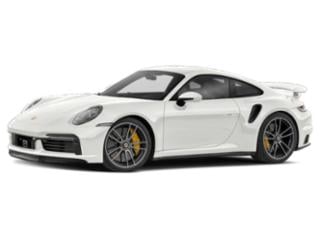
After the new generation of the Porsche 911 was released in 2020 the 2021 911 carries over with minimal changes.
SelectBrowse Listings
Porsche has done something a little different with the 2020 911. While the standard car and the Turbo and the high end GT3 and GT2RS models utilize the same chassis as underpinned last year's cars, the Carrera S in both all-wheel drive 4S and rear-wheel drive S get a brand new chassis, which will eventually be extended to the rest of the 911 lineup. For now though, the Carrera S is unique and the first to get Porsches slightly longer body style. The new body features wider wheel arches than before which house a variety of 20 or 21-inch wheel designs. New electronic door handles respond to an owner's touch, while the front end benefits from new LED headlights, while the rear gets a new, wider rear spoiler and a different tail-light design. The exterior car also utilizes more aluminum than before for increased weight savings.
SelectBrowse Listings
The 2019 Porsche 911 sees only mild changes for the new model year. Slight updates to the front-end design and a full brake-light bar offer a more aggressive look. Inside, there is a new digital display, which allows drivers to switch between functions to view a variety of information. A few powertrain updates also provide more horsepower to many of the models. All in all, the 911 continues to progress in innovation and performance for 2019.
SelectBrowse Listings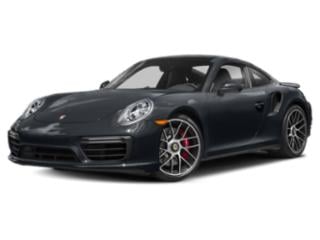
The biggest change for 2018 is the addition of a new GT3 RS model. The new GT3 RS is the ultimate trackday vehicle from Porsche, as well as being the most powerful non-turbocharged car in their lineup. With a screaming 520 hp and a partially caged interior, the GT3 RS is not for the faint of heart. But those who are capable of extracting the most of it on a racetrack will find that they are driving something that reaches very close to perfection.
SelectBrowse Listings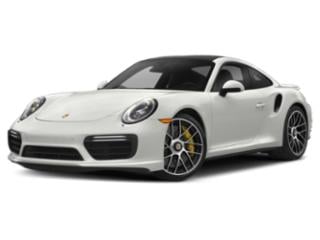
For 2017 there are minor changes are made to styling and features, a new 3.0L twin-turbocharged engine replaces last year's 3.4L engine. 911 Turbo models gain the Sport Chrono Package and Dynamic Boost function as part of their standard equipment. All 911s gain Porsche Active Suspension Management (PASM), while options such are rear axle steering and Apple CarPlay make the option's list.
SelectBrowse Listings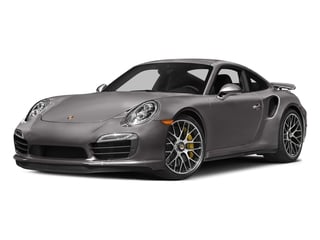
Porsche has once again added a new 911 variant in 2016: The GT3 RS. Slotting above the standard GT3, the RS costs about $50,000 more than the standard version but adds a large helping of track ready performance to the equation. Porsche have further tweaked the engine sitting in the back of the GT3 for an additional 25 hp, bringing the total up to an even 500 for the RS. More aggressive aerodynamics are immediately obvious after taking one look at the massive rear wing and louvered front fenders, but less obvious are the weight savings. The front fenders and the trunk lid are now made from carbon-fiber, while the roof is actually made from magnesium. The result is an even faster, even more focused track car than ever.
SelectBrowse Listings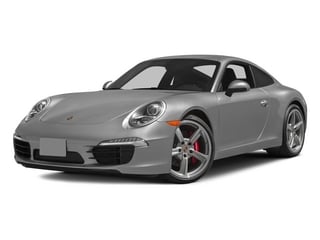
Porsche redesigned its venerable 911 in 2012, evolving the car from the "997" generation to the "991" generation, beginning with the rear-wheel-drive Carrera and Carrera S models in both coupe and convertible form. They soon updated the all-wheel-drive Carrera 4 and Carrera 4S, along with the Turbo, Turbo S, Turbo Cabriolet and GT3. For 2015, Porsche has reinvented the Targa, available in all-wheel-drive 4 and 4S guises. Porsche states that the roof can be opened and closed automatically in just 20 seconds.
SelectBrowse Listings
Porsche redesigned its venerable 911 in 2012, evolving the car from the "997" generation to the "991" generation, beginning with the rear-wheel-drive Carrera and Carrera S models in both coupe and convertible form. Last year saw the all-wheel-drive Carrera 4 and Carrera 4S updated to the "991" platform, while this year, the Turbo, Turbo S, Turbo Cabriolet, GT3 and 40th Anniversary Edition join the party. With these changes, the 911 line is once again solely built on one platform, ensuring than any 911 sold in 2014 will be fully up to date.
SelectBrowse Listings
Porsche redesigned its venerable 911 in 2012, evolving the car from the "997" generation to the "991" generation, beginning with the rear-wheel-drive Carrera and Carrera S models in both coupe and convertible form. This year sees the all-wheel-drive Carrera 4 and Carrera 4S updated to the "991" platform, which means a restyled, mostly aluminum body and 3.9-inch increase in wheelbase over the outgoing model. The new all-wheel drive models are virtually identical in appearance to the 2-wheel drive models. They also share power trains, which this year also means a slight bump in power. Carrera and Carrera 4 models utilize a 3.4L flat-six making 350 hp, up from last year's 345. And Carrera S and Carrera 4S models feature a 3.8L flat-six with an even 400 hp, up from 394 hp. Seven-speed transmissions are now featured, including the standard manual and optional PDK dual-clutch automatic. Adaptive cruise control, new for 2013, is available on the entire 911 range. It regulates speed to control the car's distance to the traffic ahead of it. When paired with the PDK transmission, it adds the Porsche Active Safe system, which senses front end collisions by warning the driver and priming the brakes. Top-of-the-line Turbo and Turbo S models (coupe and convertible) carry on with the previous-generation 997 platform, but are slated for the refresh next year.
SelectBrowse Listings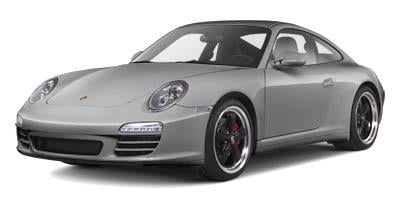
The Porsche 911 has been given a substantial update for 2012. Internally, the new evolution of the car is known as the 991, and although it still features a rear-mounted flat-6-cylinder engine, the car now features a 3.9-inch increase in its wheelbase over the outgoing model. The body is just 2.2 inches longer and it sits 0.4 inches lower than the 2011 model. The body, which is now mostly aluminum, has been given an evolutionary redesign. New features include larger headlamps fitted to slightly higher front fenders, higher wheelhouses, a more sharply angled rear window, a higher wasteline and wider rear fenders. All-new LED taillights have also been fitted. The base engine, offered in the Carrera, has dropped in displacement from 3.6 liters to 3.4 liters, but it now makes 345 hp--a gain of 4 hp over the larger outgoing unit. Carrera S models again get a 3.8 L unit, making 394 hp. Seven-speed transmissions are now featured, including the standard manual and optional PDK automatic.
SelectBrowse Listings
At the 2010 L.A. Auto Show, Porsche announced two new 911 models for 2011, the top-down Speedster and the Carrera GTS coupe and cabriolet. The Speedster is a limited-edition model, with only 356 units to be built, while the GTS occupies the middle ground between the more basic Carrera S and the GT3 super-performance car.
SelectBrowse Listings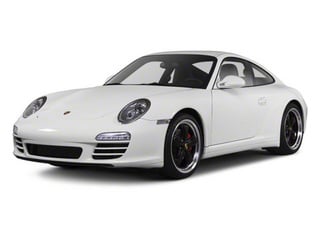
Minor changes and tweaks are in store for the 2010 Porsche 911 series. The Turbo trim gets a new engine and refined chassis tuning, while the track-oriented GT3 returns after a one-year absence. The limited-edition GT2 from 2009 is no longer available but the X51 Power Kit is again an option on all S trims.
SelectBrowse Listings
Following minimal changes last year, Porsche's venerable 911 gets some significant mid-cycle updates for the 2009 Carrera, Carrera 4and Targa models. Chief among them is the incorporation of PDK (Porsche Doppelkupplung), Porsche's new dual-clutch 7-speed automatic transmission, which replaces the long-reigning 5-speed Tiptronic system. Also new are the engines, now with direct fuel injection and significant boosts in horsepower across the range. The base Carrera 3.6L now delivers 345 horsepower, up from last year's 320, while the 3.8L Carrera S output jumps from 355 hp to 385. In the meantime, the powerplants are 13% more efficient, according to Porsche. Improved suspension tuning allows for a sportier ride, and Porsche Active Suspension Management (PASM) is available on the optional sports suspension package. The base Carrera benefits from a new braking system as well, with larger front discs and improved cooling. Exterior changes include subtle updates to the front bumper and side mirrors, standard bi-xenon headlights and LED daytime running lights and taillights. Interior improvements include an all-new entertainment and navigation system. The 911 Turbo is largely unchanged for 2009 and retains Tiptronic S as its optional automatic transmission.
SelectBrowse Listings
Joining Porsche's ever-expanding 911 model lineup for 2008 is the 911 Turbo Cabriolet, bringing the 911 Turbo's engine to the Cabriolet body style. Also new for this year is the very limited-edition, track-oriented GT2 model. The 911 lineup is otherwise carried over to 2008 without significant changes.
SelectBrowse Listings
Several new models join the Porsche 911 lineup for 2007, including a new iteration of the flagship 911 Turbo model that's more powerful than ever, Targa models that combine the attributes of the Coupe and Cabriolet, and a track-oriented GT3 model. The 911 Carrera and Carrera S models get several minor changes for 2007. A tire-pressure monitor is now standard, and the available navigation system now includes Mexico and Puerto Rico along with the rest of North America. Meteor Grey Metallic joins the color palette, and there are several new, optional 19-inch wheel designs.
SelectBrowse ListingsThe 2004 Porsche 911 model saw the addition of the C4S and Turbo trims alongside of the GT3 and the 40th Anniversary model. Various upgrades were made to different models, in-line with basic shuffling of trims. 2005 marked the year for big changes. More powerful engines were introduced, a new transmission was unveiled, rack-and-pinion steering was added as well as adjustable suspension systems, and a new passenger compartment was incorporated. In 2006, the 911 offered an optional all-wheel-drive system as well as the desirable Carrera power kit, which boosted horsepower to 381.
New 19 wheels were introduced, and a tire-pressure monitoring system debuted with an automatic airbag cut-off switch for passengers. 2007 saw the return of the 911 Turbo and the GT3 sports models, offering robust horsepower and sports-tuned handling. In 2008, the GT2 model returned, boasting 530 horses under the hood. A laundry list of updates was in store for 2009, with new front fascias, direct-injection engines, larger and more powerful brakes, and an all-new touchscreen console and center stack. The most notable changes for 2010 were the return of the GT3 and GT3 RS trim levels.
Major trim shuffling in 2011 saw updates to the GTS, Turbo S, GT2 RS, GT3 RS and limited-edition GT3 RS 4.0 trims, with some trims making their debut. A redesigned 911 was unveiled for 2012, sporting a longer, wider frame and a superior engine. The 911 crossed through 2013-2014 relatively unchanged, with exception to tweaking of the trim levels.
See the latest and greatest features of the newly redesigned cars, trucks and SUVs headed to a dealer near you. Search by car manufacturer or specific models to get an in-depth preview of the latest tech, specs, features and photos for the latest model year.