What Our Expert Says…
In the sections that follow, our expert provides his own perceptions about how the Nissan Sentra measures up in each of the 10 categories that comprise the J.D Power 2019 Automotive Performance, Execution and Layout (APEAL) Study.
Exterior
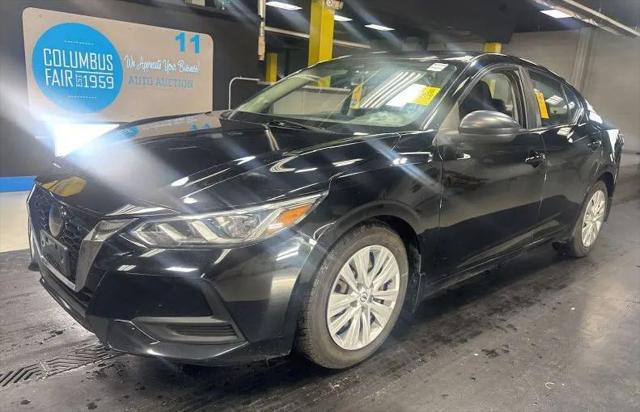
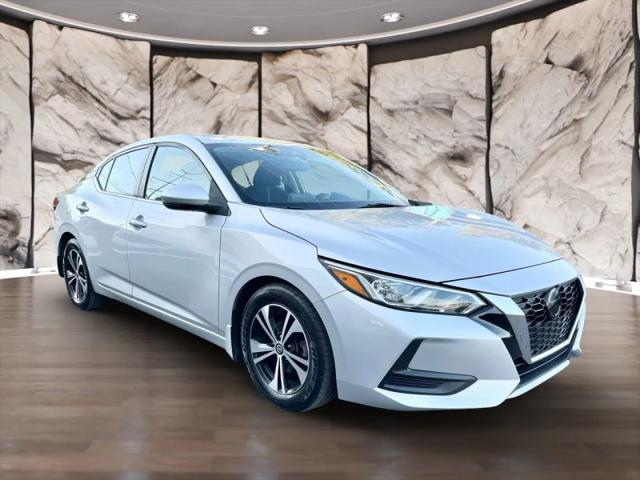
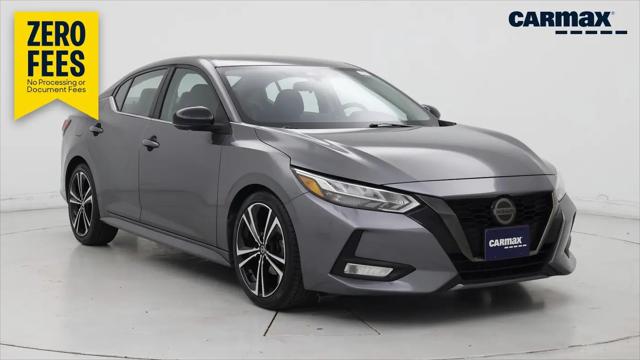
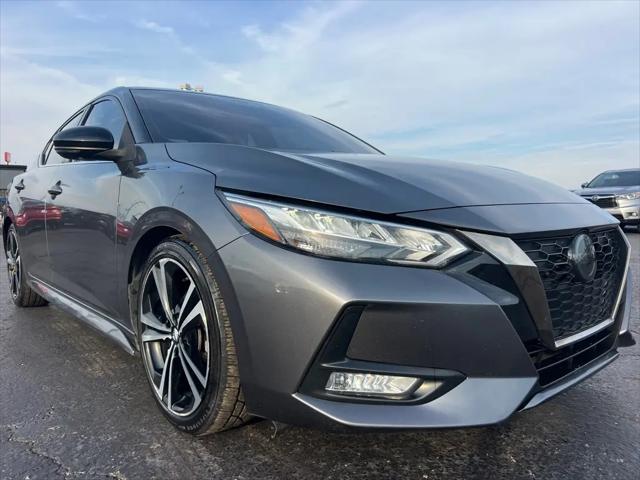
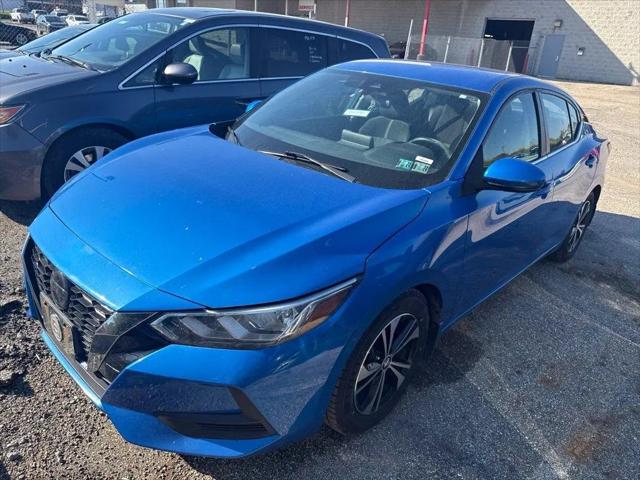
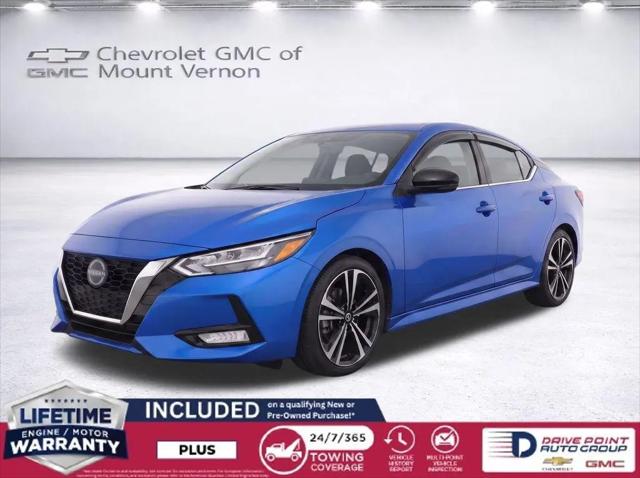
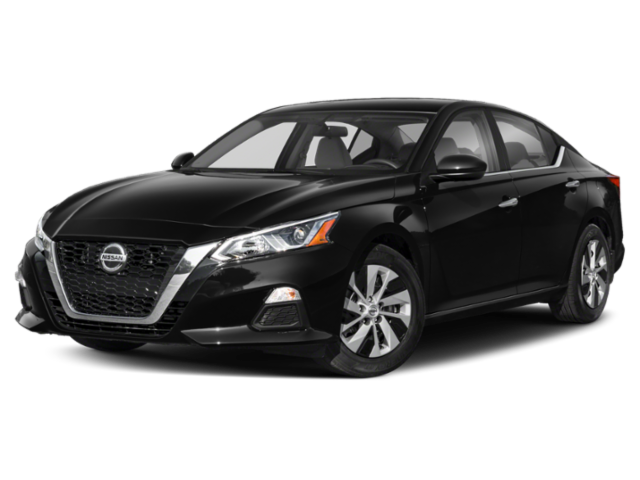
Talk about going from zero to hero. Is the 2020 Nissan Sentra one of the best-looking cars in its class? Yes, it is, especially in SR trim with two-tone paint.
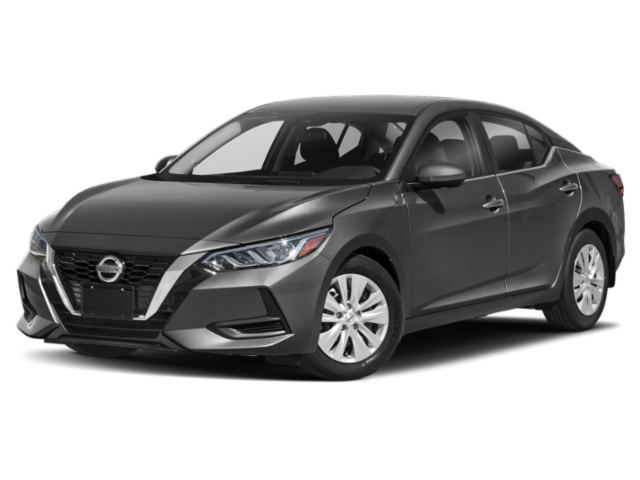
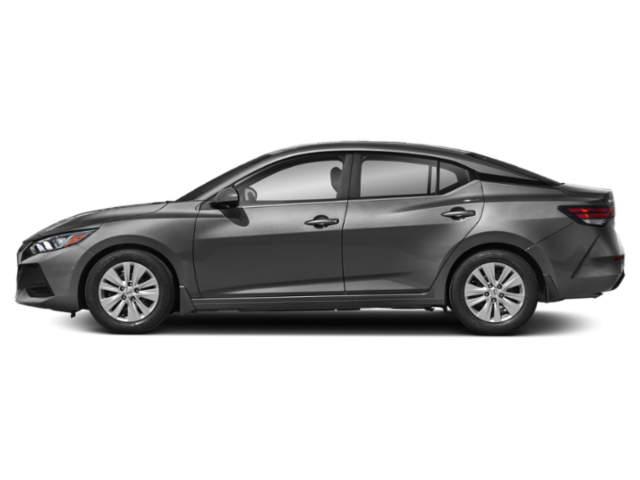
Sure, we’ve seen the Sentra show before on the Altima, Maxima, and Versa. But Nissan’s V-Motion design themes are best applied to the redesigned 2020 Sentra. Here, the styling reflects balance, proportion, and detail that comes together in an exceptionally cohesive whole. There isn’t a line wrong on this new Sentra, and since existing Sentra owners already liked the old car’s styling, there’s nothing but upside here for Nissan.
The automaker can easily siphon customers from other brands with this new, sporty, and upscale design. Marketers just need to get it in front of people’s faces, with the price tag in big, bold print.
Interior
The goodness continues inside the Sentra’s artfully rendered cabin. From the large and legible analog gauges to the flat-bottom steering wheel and round air vents, the Sentra’s interior is sporty and simple, with lots of knobs and buttons and, in SR trim, quality materials located in all of the right places.
Nissan even improved the feel of the transmission shifter, though it still feels a little loose and rickety compared to the best vehicles in the class. At least it’s not a collection of buttons, or a joystick, or some other such nonsense.
My SR test car’s orange interior stitching matched its Monarch Orange paint color, and if you skip this trim level for the Sentra SV with the Premium Package, you’ll find quilt-stitched leather that gives the car an upscale look. Just don’t caress the cowhides, because it’s definitely reflective of the car’s price.
Seats
Feeling just as good as it looks, the new Sentra finally gets Nissan’s NASA-inspired Zero Gravity seat designs, which aim to mimic the weightlessness of space. Translated, that means less stress on your body because your spine is placed in as close to a neutral position as is possible.
Based on my driving, the new Sentra is mighty comfortable. Every trim level has a driver’s seat height adjuster and a tilt/telescopic steering wheel, and both the SV and SR offer 6-way power adjustment for the driver along with 2-way lumbar support. These trims are also available with heated front seats.
The front passenger’s seat doesn’t have a height adjuster, but it is positioned high enough off of the floor that this isn’t a significant source of complaint. The rear seat offers room on par with other compact cars, and occupants sit up high enough to enjoy a good view out as well as decent thigh support. Plus, the front seat backs are softly padded, making them kind to knees and shins.
Climate Control System
If there is anything to complain about when it comes to the Sentra’s interior comfort, it’s the lack of rear air conditioning vents on the back of the center console. Granted, that would make the Sentra incrementally more expensive, but it would be a worthy investment in happy passengers.
Located beneath the three round center air vents, the dual-zone automatic climate controls that come standard with SV and SR trim feature large temperature knobs and sizable buttons. Plus, the knobs are knurled, a subtle but classy detail.
Unfortunately, mild Southern California weather prevented testing of the system in extreme conditions.
Infotainment System
Positioned above the center air vents in tablet-style presentation, the Sentra’s standard touchscreen infotainment display features knobs for volume/power and radio station tuning. System menu shortcuts are below the display, marked with clear lettering.
A 7-inch display is standard in the base Sentra S, and this version includes Bluetooth, a hands-free text messaging assistant, and Siri Eyes Free voice recognition technology. Upgrade to SV or SR trim for a larger 8-inch display, Apple CarPlay, Android Auto, satellite radio, and an extra USB charging port. An 8-speaker Bose premium sound system is optional with SR trim.
I thought the SR’s Bose components sounded decent, and the controls are easy to understand and use. The exception is the small radio station pre-set buttons on the screen itself. It’s hard to stab one with any accuracy because the Sentra SR has a fairly firm ride. So get used to cycling through them with the steering wheel controls instead.
Storage and Space
Nissan provides plenty of storage inside of the Sentra. The center console bin is deep and wide, the glove compartment is large, and there is storage everywhere: armrests, door panels, and forward of the shifter. Open the Sentra’s trunk, and you’ll find 14.3 cu.-ft. of space that expands thanks to the 60/40-split folding rear seat.
Visibility and Safety
Thanks to door-mounted mirrors, front quarter window glass, and thin windshield pillars, it is easy to see out of the new Nissan Sentra.
The single exception is directly to the rear, where the high deck blocks the lower part of the view to the back of the car. To help resolve that, a reversing camera is standard, and the Sentra SR offers an optional Intelligent Around View Monitor. Basically, this is a 360-degree surround view camera that also includes Nissan’s Moving Object Detection technology.
Additionally, Nissan’s Safety Shield 360 technology is standard on every 2020 Sentra. This suite of advanced driving assistance systems (ADAS) includes forward collision warning that can see two cars ahead, pedestrian detection, automatic emergency braking, blind-spot warning, rear cross-traffic warning, and lane-departure warning.
In practice, the Sentra’s adaptive cruise control is not as refined as what you’ll find in a Toyota Corolla with Toyota Safety Sense 2.0. The Sentra’s technology brakes a little bit late and a little bit too hard, drawing your attention and irritation to its operation. However, the Sentra’s lane departure warning system is delightful, producing a subtle vibration through the steering wheel to alert a driver to lane wander. You won’t want to drive with it off.
Engine/Transmission
Aside from fuel economy, the least favored thing about the previous-generation Sentra according to the people who own them was the engine and transmission.
There is good news on this front. The new Sentra gets a more powerful 2.0-liter 4-cylinder engine making 149 horsepower and 146 lb.-ft. of torque. That still isn’t impressive in a modern compact car, but it’s on par with many of the Sentra’s competitors.
A continuously variable transmission (CVT) delivers the power to the front wheels. Normally, this is disappointing news, but Nissan’s latest D-Step CVT is good as far such transmission go. It is programmed with stepped ratios so that it sounds and feels more like a traditional automatic.
I like this CVT in this car. Under normal driving conditions, you can’t tell the Sentra has a CVT, and the transmission does make maximum use of the available power. At part- to hard-throttle input, each step in the transmission produces a bit of a shove forward as the CVT moves to the next ratio, and it’s both different and unexpectedly satisfying.
The new Sentra deserves more power, though. Dynamically, it’s tuned to handle more than the 149 horses it’s got. Nissan doesn’t offer any alternate driving modes to adjust powertrain character, either.
This may change in the future. Nissan was coy when asked if more oomph might be in the offing, so don’t be surprised to see the return of a turbocharger at some point.
Fuel Economy
While driving the new Nissan Sentra between the farmlands of Ventura County and the busy streets of Santa Monica, I averaged 28.4 mpg in mixed driving conditions that, admittedly, included some rousing runs across the mountain range north of Malibu.
Official EPA estimates aren’t published yet, but Nissan expects the rating to be 32 mpg in combined driving.
Driving Dynamics
Nissan didn’t skimp on the Sentra’s steering and suspension. The car employs dual-pinion, rack-mounted electric steering, and the result is impressive feel and feedback. Effort levels are little heavy, but this perfectly matches the Sentra SR’s sporty personality.
The Sentra also boasts a multi-link independent rear suspension, an investment that pays dividends in ride and handling qualities. Nissan could’ve easily slapped a cheap torsion beam axle under the rear end and called it a day, but then I wouldn’t be telling you how enjoyable the new Sentra is to drive.
In combination with the automaker’s Intelligent Trace Control (brake-based torque vectoring) and Intelligent Ride Control (smooths out speed humps and drainage dips), the new Sentra is calm, cool, and collected whether you’re ripping down a canyon road or commuting in bumper-to-bumper traffic.
By happenstance, I was also testing the redesigned 2020 Nissan Versa the week I drove the new Sentra. The Sentra represents a definite step up, and as much as I recognize the Versa as a dramatically improved car over the vehicle it replaced, I also think it’s worth stretching the budget to get into a Sentra instead.


 For this review, JD Power evaluated a Sentra SR equipped with a Premium Package, upgraded paint with a two-tone treatment, and a carpeted floor and trunk mat set. The price came to $25,325, including the $925 destination charge.