Following a significant refresh last year, the 2026 Hyundai Tucson remains primarily a carry-over model; updates for the new model year are minimal, focusing on trim level revisions and enhanced technology features.
SelectBrowse Listings
The Hyundai Tucson gets an updated trim lineup, and a refreshed exterior for 2025.
SelectBrowse Listings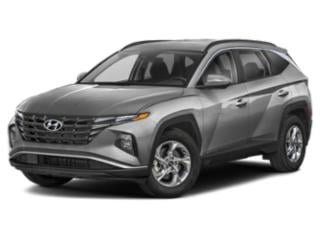

After a redesign in 2022 the Hyundai Tucson carries over with minimal changes for 2023.
SelectBrowse Listings
The Hyundai Tucson gets a redesign for 2022 including an updated engine, and upgraded in-car and driver assistance systems.
SelectBrowse Listings

After a redesign last year, the Hyundai Tucson carries over into 2020 essentially unchanged.
SelectBrowse Listings
The Hyundai Tucson has been given several major updates for 2019, including changes to the exterior styling as well as to the interior layout. The most noticeable change comes at the front of the vehicle, where the revised fascia is cleaner, more functional and better looking. The rear of the vehicle is also redesigned, with new taillights as well as other subtle changes to the back of the vehicle. Inside, the Tuscan gets a new center stack, rearview mirror and instrument cluster. New features for 2019 include wireless charging capabilities for phones and other devices as well as new safety features including a surround view monitor, smart cruise control and a forward collision avoidance system.
SelectBrowse Listings
The Hyundai Tucson comes into 2018 with a re-shuffling of trim level packages that now number five. New standard features for SEL and higher trims include heated front seats, SiriusXM, plus Android Auto and Apple CarPlay. The SEL Plus trim gets an 8-inch touch screen and Infinity audio, while the Limited trim level gains a heated steering wheel.
SelectBrowse Listings
After a complete redesign last year, the Tucson returns for 2017 mostly unchanged. Interior materials have been improved throughout the model range for this year, while the premium 315-watt Infinity sound system is improved through new features, offering excellent sound quality.
SelectBrowse Listings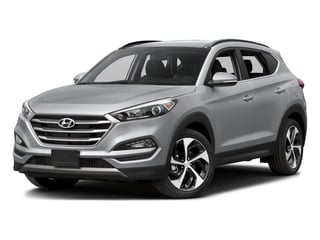
The Hyundai Tucson is completely new for 2016. The shapely Tucson adheres to Hyundai's Fluidic Sculpture 2.0 design philosophy, which debuted on the 2015 Genesis. It is offered in SE, Eco, Sport and Limited trims, with power from either a 2.0L four or a 1.6L turbocharged four, available in both front- and all-wheel drive. Pricing starts at $22,700.
SelectBrowse Listings
After a major model update in 2014, the Hyundai Tuscon returns in 2015 with only minimal changes. Limited models get improved LED taillights, while a new Popular Equipment package is available for the GLS. The new package includes a rearview camera, a power driver's seat, automatic headlights and a 4.3-inch color touchscreen.
SelectBrowse Listings
For 2014, the Hyundai Tucson receives two new engine options with gasoline direct injection. The 2.0L 4-cylinder produces 164 horsepower and 151 ft-lb of torque, while the 2.4L 4-cylinder makes 182 horsepower and 177 ft-lb of torque, up from last year's 176 horsepower. The implementation of direct injection provides a great balance between performance and fuel economy, with the 2.0 returning an EPA-estimated 23 mpg in the city, while the 2.4 returns 24 mpg combined. The bigger engine is also capable of towing up to 2,000 when properly equipped. The 5-speed manual transmission has been dropped, and all Tucson models now utilize a six-speed automatic transmission with SHIFTRONIC manual control. Elsewhere, the Tucson gets new projector headlights with LED accents, plus LED taillights, standard amplitude selective dampers, new 17- and 18-inch alloy wheel designs, new interior colors, standard steering-wheel-mounted audio and cruise controls, two-stage reclining 60/40 split rear seats, standard Bluetooth hands-free connectivity, and more. Finally, the entry-level Tucson GLS offers all-wheel drive for the first time.
SelectBrowse Listings
The Hyundai Tucson is virtually unchanged for 2013. Minor improvements include fog lights and automatic headlight control on the GLS model, proximity key entry with pushbutton start on Limited models and heated front seats on front-wheel-drove GLS models.
SelectBrowse Listings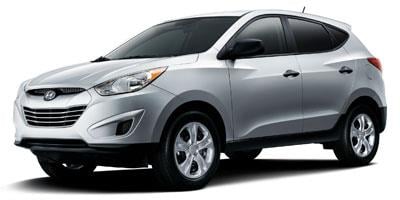
For 2012, the Hyundai Tucson receives small changes primarily aimed at improving fuel economy. Among them is the addition of low rolling resistance tires, a high-efficiency air conditioning system and Active ECO System, which modifies engine and transmission controls to smooth throttle response.
SelectBrowse Listings
The Hyundai Tucson, a compact crossover SUV, was just fully redesigned for the 2010 model year but returns for the 2011 with a new Tucson GL base model, available only with front-wheel drive and with a smaller, slightly more economical 2.0L engine. GLS models get a much-improved standard equipment list that includes such things as a telescopic steering wheel, steering-wheel audio controls, leather trim, Bluetooth, roof side rails and new trims, while Limited models get a new auto-dimming rearview mirror with HomeLink universal garage-door opener and Sachs Adaptive Selective Dampers for a better ride. Heated seats now come standard on all Tucson models with all-wheel drive. For 2011, the Tucson's Motor Driven Power Steering system has been upgraded to work better with the stability control system.
SelectBrowse Listings
The Hyundai Tucson has been redesigned for 2010. It gets all new sheet metal that features a smoother shape, a lower profile, and a more car-like styling than last year. A new 2.4L engine is standard for 2010 and it is available with either a 6-speed manual or a 6-speed automatic transmission.
SelectBrowse Listings
The 2009 Hyundai Tucson gets a new front grille and a redesigned tailgate, giving it a sportier look. Models with 4WD now get heated front seats and windshield wiper de-icers. The Limited trim comes standard with a sunroof. A new selection of alloy wheels and a charcoal black interior are available for 2009. A navigation system will become available later in 2009.
SelectBrowse Listings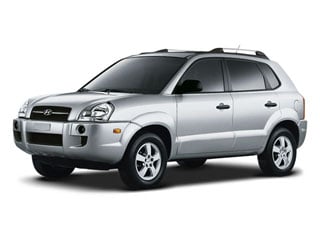
Active head restraints join the Hyundai Tucson's already long list of standard features for 2008, and XM satellite radio and an auxiliary audio input join the list of standard features later in the model year. Also, a six-disc CD changer is now standard on the Limited model, and a new black leather interior replaces last year's gray leather.
SelectBrowse Listings
Since the Hyundai Tucson is a relatively new model, the 2007 model has few changes from 2006. The model lineup has been shuffled a bit, with Hyundai offering GLS, SE, and Limited trims instead of the GL, GLS and Limited. There are two new colors, copper and gray; and the silver hue has been changed. There are now two trip computers on the SE and Limited models, plus the audio system has been updated.
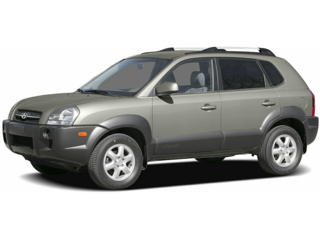
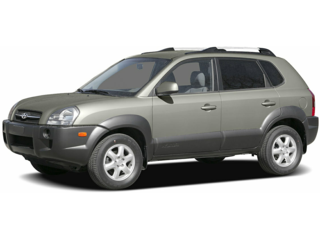
SelectBrowse ListingsSmaller than their Santa Fe sport utility vehicle, Hyundai created the Tucson for the 2005 model year based on a similar platform to the one used for the Elantra. Styled as an athletic, versatile vehicle, the 2005 Hyundai Tucson was offered with a front-wheel drive or a four-wheel drive system using Borg Warner Electronic InterActive Torque Management. Engine power for the first-year Tucson consisted of a 2.0-liter four-cylinder base powerplant and a 2.7-liter V-6 engine. A five-speed manual transmission was offered with the base engine while a four-speed Shiftronic automatic gearbox was available.
Focused on a being a value-oriented compact utility vehicle, the Hyundai Tucson arrived air conditioning, 16-inch alloy wheels and a six-speaker stereo system. Six airbags, electronic stability program with traction control and four-wheel disc brakes was supplied as standard safety equipment on all 2005 Tucsons. For 2006, a premium-appointed Limited model replaced the LX version of the Hyundai Tucson featuring standard equipped leather seating. 2005 to 2009 model year Hyundai Tucson gained a several enhancement over the course of the first generation. XM satellite radio was added standard for 2008 while the 2009 model year Tucson featured several efficiencies that increased fuel economy.
For 2010, a second-generation Hyundai Tucson embodied the auto companys new Fluidic Sculpture design language. 3.3 inches longer than the previous generation, the 2010 Tucson was actually 61 pound lighter in overall weight. Along with accommodating five occupants, the second-generation Tucson was rated for 25.7 cubic of cargo volume (expanding to 55.8 cubic feet when the rear seat is folded down). The six-cylinder engine was dropped but a new 2.4-liter four-cylinder engine produced 176 horsepower. A smaller 2.0-liter powerplant was added for 2011 as a new base engine. An extensive 2014 model year refresh to the Hyundai Tucson included gasoline direct injection powerplants and standard Bluetooth connectivity.
See the latest and greatest features of the newly redesigned cars, trucks and SUVs headed to a dealer near you. Search by car manufacturer or specific models to get an in-depth preview of the latest tech, specs, features and photos for the latest model year.